The regulation of interpenetration in three-dimensional covalent organic frameworks (3D COFs) poses a fundamental challenge while offering a powerful means to engineer their pore environments. In this study, we demonstrate that the geometry and electronic character of linear linkers are decisive for achieving such control. Using a rigid, sterically extended 6-connected trigonal prismatic amine building block, we synthesized an isoreticular pair of acs-topology 3D COFs to compare the influence of a fully aromatic linker. The resulting frameworks, tris(trimethyl-bis-4-aminophenylphenyl)benzene (TTAPB)- terephthalaldehyde (TPA)-COF and TTAPB-C,C-diformyl-p-carborane (DFCB)-COF, exhibited dramatically different degrees of interpenetration, 6-fold and 2-fold, respectively. This contrast originates directly from the linker core; the planar π-conjugated TPA promotes dense, multifold interpenetration, whereas the globular, electron-deficient carborane introduces steric and electronic constraints that strongly limit network replication. Consequently, the difference in the interpenetration dictates the distinct porosity and gas adsorption behavior. By elucidating the structure-determining roles of monomer geometry and electronic properties, this work establishes a rational design principle for programming interpenetration and porosity in 3D extended frameworks.
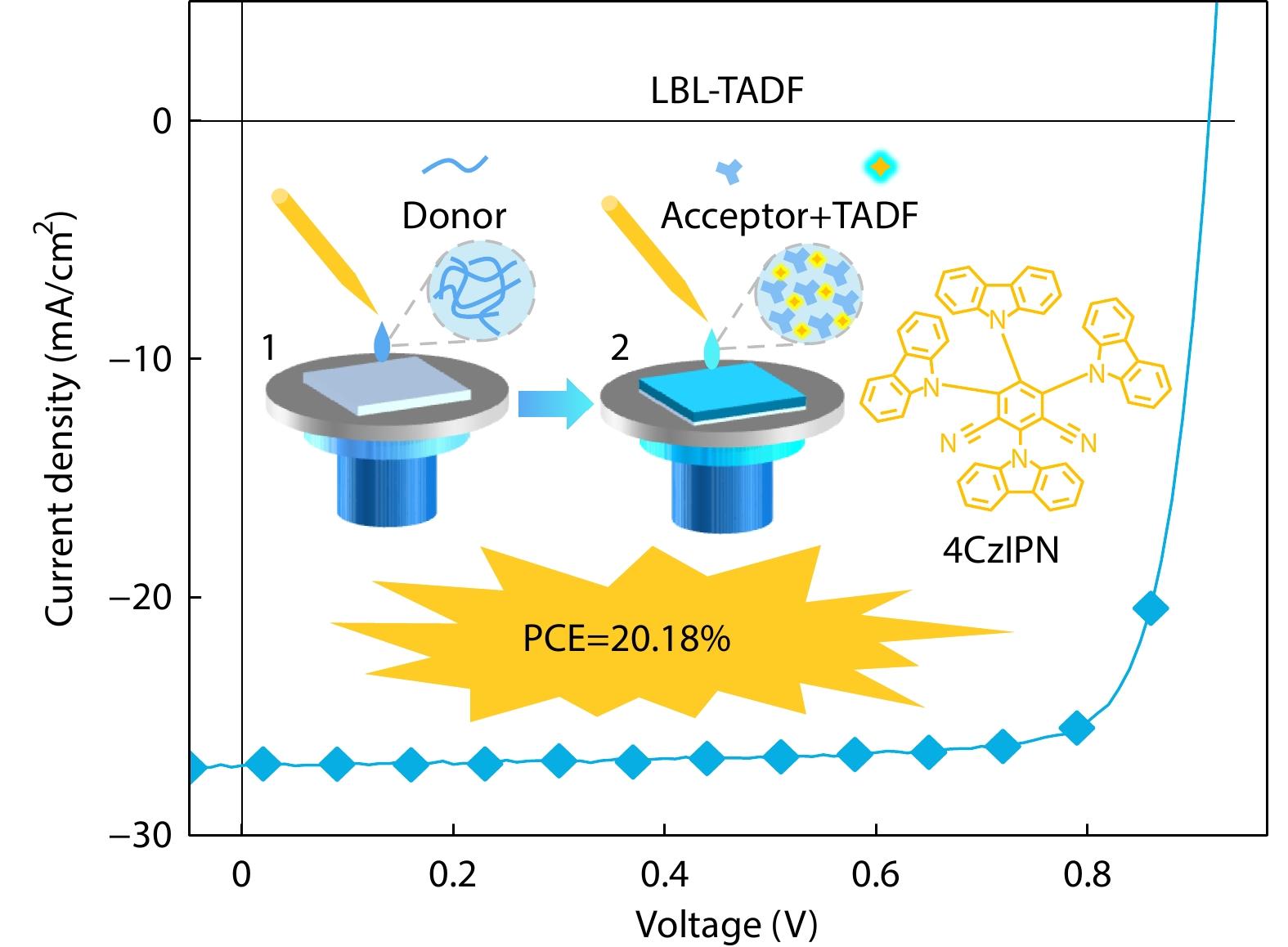
Simultaneously optimizing the optoelectronic properties and the morphology of active layer is the key to high-performance polymer solar cells. Here, we present a novel materials-processing paradigm that incorporates a thermally activated delayed fluorescence (TADF) additive into the layer-by-layer (LBL) fabrication process to concurrently optimize nanoscale morphology and mitigate non-radiative recombination. We demonstrate that the TADF additive facilitates the formation of an ideal interpenetrating network during LBL film deposition, while its intrinsic TADF properties effectively reduce non-radiative voltage loss, enhance exciton lifetimes, and facilitate charge generation and transport. Devices fabricated with this synergistic strategy achieve both high short-circuit current density and open-circuit voltage, culminating in a remarkable power conversion efficiency exceeding 20%. This work not only provides an efficient and reproducible processing route for high-performance polymer solar cells (PSCs) but also opens a new avenue for addressing fundamental optoelectronic limitations through coordinated material design and processing innovation.
Water/alcohol-soluble organic luminophores are a crucial subclass of luminescent materials that uniquely enable biomedical applications and eco-friendly optoelectronics that are inaccessible to their conventional hydrophobic counterparts. This review systematically outlines two fundamental strategies for achieving this essential solubility: chemical modification through covalent functionalization and physical encapsulation via supramolecular assembly. We analyzed the inherent trade-offs of each approach in terms of stability, luminescence properties, and synthetic complexity. Subsequently, we trace the evolution of these design principles across three major classes of luminophores: fluorescent, phosphorescent, and thermally activated delayed-fluorescence systems. Furthermore, we highlight their transformative applications in bioimaging, biosensing, anti-counterfeiting, and sustainable electronics. By mapping these strategies and applications, this review underscores how solubility design paves the way for broader utilization of organic luminophores in cutting-edge luminescent technologies.
Cancer immunotherapy, which harnesses the host immune system to combat cancer, has advanced into preclinical and clinical trials. However, the tumor microenvironment (TME) usually promotes tumor angiogenesis and induces immune tolerance. Recently, polymeric nanomedicines with comprehensive regulation of the TME have attracted research interest. Compared with others, polymeric nanomedicines have outstanding characteristics, including facile preparation, improved tumor penetration, longer blood circulation, and better bioavailability. In particular, polymeric nanomedicines hold great potential for integrating combined treatments and imaging methods to concurrently modulate and trace the functional processes of multiple immune cells. This review summarizes the advances in polymeric nanomedicine-based strategies for TME regulation, including the regulation of TME stromal cells, the immune microenvironment matrix, and vasculature. Furthermore, the development of comprehensive polymeric nanomedicine-based theragnostic platforms integrated with imaging segments is briefly introduced.
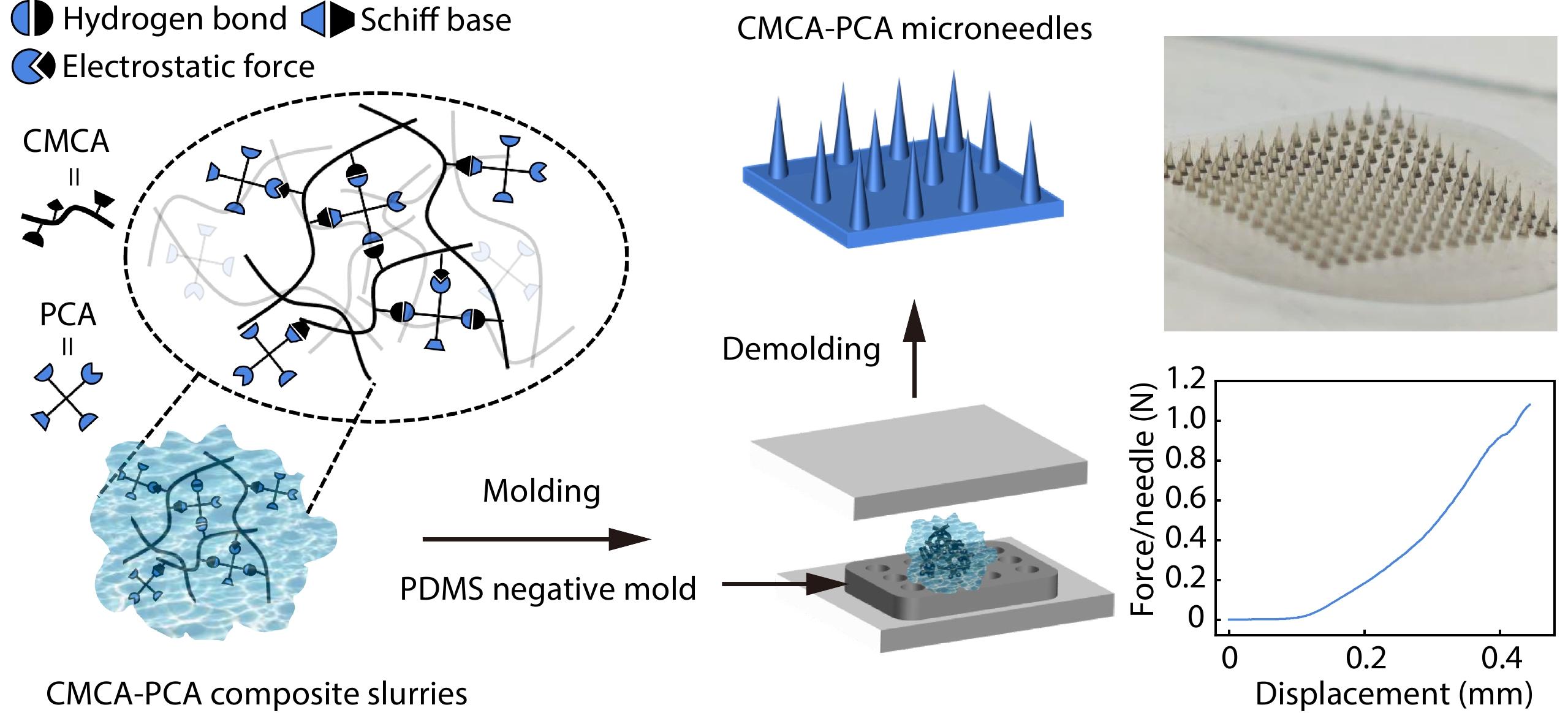
Polymer microneedles (MNs) have emerged as promising next-generation transdermal drug delivery platforms owing to their noninvasive nature and high delivery efficiency. Conventional fabrication strategies for polymer MNs mainly rely on mold-assisted vacuum casting or hot pressing. However, these approaches often fail to simultaneously achieve rapid fabrication and mild processing conditions, which are particularly critical for the fabrication of temperature-sensitive drug-loaded MNs. Herein, we report a vacuum-assisted pressing strategy for MN fabrication based on O-carboxymethyl chitosan (CMCA) and natural polyphenol protocatechuic acid (PCA) supramolecular composite slurries. This method enables MN production under significantly reduced processing times (<12 h) and mild thermal conditions (50 °C). Viscoelastic supramolecular composite slurries can be obtained by precisely tuning the polymer-to-polyphenol ratio, which is highly compatible with vacuum-assisted pressing in MNs molding. The resulting polymer-polyphenol supramolecular composites exhibit robust mechanical properties, with a fracture stress of 0.5 MPa and a toughness of 1.31 MJ·m–3. Notably, supramolecular MNs demonstrated a high fracture force of up to 1.08 N per needle, indicating sufficient mechanical integrity for transdermal insertion. This fabrication strategy offers a viable route for low-cost, scalable, and mild MN fabrication, highlighting its strong potential for practical and commercial applications.
Polyelectrolyte (PE) gels are widely used in fields ranging from controlled drug delivery to tissue engineering, owing to their stimuli-responsive swelling behavior. The electrostatic interactions within the gels play a crucial role in the physical mechanisms underlying this response. In this work, we investigate the salt-dependent swelling behavior and shear modulus of PE gels based on a cell model, which explicitly addresses the inter-monomer electrostatic interactions. Through free energy minimization and asymptotic analysis, we derive four distinct scaling regimes for the equilibrium swelling ratio and modulus as functions of salt concentration, covering both overlapping and non-overlapping electric double layers. Comparisons between polyelectrolyte gels with different cross-link densities and charge intensities are also presented.
Anion exchange membranes (AEMs) are central to clean energy technologies such as AEM water electrolysis, and clarifying how water binding and solvation govern ion transport and membrane swelling is critical to advancing their performance. Here, using a distorted, five-site branching agent, dispiro[fluorene-9,1’-3’-methylenecyclohexane-5’,9’’-fluorene] (SFCF), we report branched poly(terphenylene 3-piperidinium) membranes that combine strong water binding with efficient ion transport. Upon polymer branching, the membranes exhibit a higher fraction of bound water and increased local molecular mobility while absorbing only half as much water as the linear analog. As a result, the optimized B-iPTP-3 delivers a high conductivity of 186 mS·cm−1 at 80 °C with a low 56 wt% water uptake and less than 15% swelling. In addition, by isomeric piperidinium chemistry, the membrane shows excellent alkaline stability in 1 mol·L–1 aq. NaOH, with no degradation after a 2000-h soaking at 80 °C. An AEM water electrolyzer equipped with the branched membrane achieves a high current density of up to10.4 A·cm−2 at 2 V. Moreover, the electrolyzer can operates stably at 1.0 A·cm−2 for 1000 h with a voltage decay of 95 µV·h−1, without increased hydrogen crossover. This work highlights a branching-enabled design strategy for tuning water binding and solvation to realizing high performance, durable AEMs for clean energy devices.
Seaweed polysaccharide-based fibers featuring incomparable merits, such as green fabrication procedures and intrinsic functionalities, are promising sustainable alternatives to petrochemical fibers that threaten both the ecological environment and human health. However, achieving simultaneously high strength, toughness, and stability of seaweed polysaccharide fibers remains a long-standing challenge owing to their low crystallinity and ionic crosslinks. Herein, we report a stretch-mediated network engineering strategy to overcome this limitation. Anisotropic architectures composed of dual-crosslinked sodium alginate and chemically crosslinked poly(vinyl alcohol) are prepared by pre-stretching. The highly ordered chemically crosslinked networks endow the fibers with high strength, and the anisotropic double networks prevent stress concentration and enable high toughness. The resultant fibers exhibit a tensile strength of 547.8 MPa, Young's modulus of 17.6 GPa, and toughness of 43.3 MJ/m3, surpassing most regenerated biomass fibers. Additionally, fibers with an anisotropic network exhibit good aqueous stability, guaranteeing their usage in diverse solution environments and potential applications in triboelectric textiles. This study demonstrates a general and scalable strategy to decouple the strength–toughness trade-off in polysaccharide fibers without sacrificing biodegradability, thereby providing new insights into the structural design of robust, stable, and sustainable biomass-based fibers.
The blood-brain barrier (BBB) is a major obstacle to the delivery of most therapeutic molecules to the brain, thereby preventing the effective treatment of numerous neurological disorders. However, this barrier can be bypassed by exploiting receptors and transport proteins that are highly expressed in the brain capillary endothelial cells (BCECs). Given the overexpression of glucose transporter 1 (GLUT1) at the BBB and in glioma cells, a mannosylated nanocarrier was developed as a potential dual-targeted drug delivery system to enhance BBB penetration via GLUT1-mediated transcytosis and improve drug accumulation in glioma cells via GLUT1-mediated endocytosis. In vitro physicochemical characterization revealed that the mannosylated nanocarrier presented a satisfactory size of 123 nm with a uniform distribution and high encapsulation efficiency for a newly developed aggregation-induced emission (AIE) photosensitizer. Our findings revealed that this mannosylated nanocarrier represents a promising nanoplatform capable of crossing the BBB and enabling effective photodynamic therapy.
Multithiophene-based fused-ring electron acceptors (MFREAs) have demonstrated remarkable performance not only in organic solar cells, but also in other optoelectronic devices owing to their extended near-infrared absorption. However, an insufficient electrostatic potential (ESP) difference with the donor results in a weak intermolecular electric field (IEF), which leads to low exciton dissociation efficiency. In addition, the narrow bandgap causes substantial energy loss (Eloss), thereby restricting the open-circuit voltage. To address these problems, we developed two novel MFREAs, 6TFIC-C11-4F and 6TFIC-C11-4Cl, which were developed from the typical molecule 6TIC-4F via central-core side-chain fluorination and terminal chlorination. Although core fluorination slightly attenuated the intramolecular charge transfer (ICT) effect, this strategy significantly increased the overall average ESP value, strengthening the donor-acceptor IEF, thereby facilitating exciton dissociation. Terminal chlorination enhanced the ICT effect, resulting in a red-shifted absorption spectrum and stronger IEF. Notably, 6TFIC-C11-4F exhibited increased intermolecular interactions and reduced π-π stacking distances, leading to better charge transport. As a result, the PM6:6TFIC-C11-4F device achieved a decent power conversion efficiency of 13.32%, significantly outperforming the PM6:6TIC-4F device (10.52%). In addition, the PM6:6TFIC-C11-4Cl device demonstrated reduced Eloss and a higher short-circuit current density, validating the potential of central-core side-chain fluorination and terminal chlorination in designing high-performance MFREAs.
Silk fibroin hydrogels frequently exhibit insufficient mechanical strength for biomedical applications. Conventional enhancement strategies often rely on toxic crosslinkers or nondegradable components, thereby compromising biocompatibility and biodegradability. Recently emerged organic solvent-based methods represent an advance, but their associated environmental toxicity remains a concern. In this work, we present a novel thermal oscillation strategy for fabricating high-strength silk fibroin hydrogels exclusively from all-aqueous silk fibroin solutions, eliminating the need for toxic chemicals or non-degradable materials. The resulting hydrogels exhibit outstanding mechanical properties, tensile strength of 2.6 MPa, elongation rate of 152.6%, and toughness of 3.0 MJ/m3, which not only surpass the organic solvent-derived silk fibroin hydrogels but also rival the dual-crosslinked, double-networked or composite systems. The silk fibroin hydrogels also exhibit a minimal swelling ratio, outstanding long-term integrity, and excellent biocompatibility. The robust, biocompatible, and biodegradable silk fibroin hydrogels are promising for biomedical applications such as load-bearing tissue scaffolds, long-term implantable drug delivery systems, and durable wound dressings.
The growing demand for higher operating frequencies, faster speeds, and greater power density in modern electronics has positioned embedded dielectric film capacitors as a key enabler of system miniaturization and enhanced reliability. However, such integration requires dielectric materials that exhibit both high intrinsic breakdown strength and superior high-temperature stability, a combination which is seldom achieved by conventional polymer dielectrics. In this work, we present a rationally designed rigid-flexible crosslinked network based on bismaleimide (BMI) that delivers robust performance under extreme electrical and thermal conditions. By co-curing a biphenyl epoxy (BPEP) resin with a 2,2-bis[4-(4-maleimidophenoxy)phenyl]propane (BMP)-based BMI matrix, a densely co-crosslinked network is formed. In this network, BPEP acts as a toughening agent that mitigates internal stress and inhibits micro-crack initiation, while its rigid biphenyl motifs cooperate with BMP to establish deeper charge traps, thereby effectively suppressing charge carrier excitation and transport. These synergistic mechanisms enable the optimized co-cured BMP/10%BPEP film to achieve a leakage current more than ten times lower than that of pristine BMP at 200 °C, along with a remarkable increase in breakdown strength from 509 MV/m to 615 MV/m and a rise in dielectric constant from 3.45 to 3.71. Consequently, the film exhibits an outstanding discharge energy density of 4.59 J/cm3 with 90% efficiency at 200 °C, as well as excellent cycling stability over 50000 charge-discharge cycles. This study offers a feasible material design strategy for high-performance polymer dielectrics suitable for embedded capacitors in advanced electronic packaging.
Iodine is an attractive candidate for living radical polymerization owing to its strong halogen bonding ability and the vigorous C―I bond, enabling diverse mechanisms including iodine transfer polymerization (ITP), reverse iodine transfer polymerization (RITP), reversible complexation mediated polymerization (RCMP), and atom transfer radical polymerization (ATRP). Among them, iodine-mediated ATRP stands out for its high activation rate constants, low equilibrium constants, and convenient post-polymerization modification. However, the use of alkyl iodides as initiators remains challenging because they are thermally and photochemically unstable. To solve this question, RITP mechanism was incorporated into the ATRP for the in situ generation of the alkyl iodide from I2. Further studies revealed that the ATRP ligands could also trigger the RCMP mechanism. Kinetic studies, radical trap experiments, and density functional theory (DFT) calculations clarified the contributions of each mechanism. This RITP/RCMP/ATRP ternary polymerization avoids the use of unstable initiators and achieves controlled polymerization of various monomers.
Cryopreservation is essential for cell therapy and regenerative medicine, while macromolecular cryoprotectants play a crucial role in mitigating the freeze injuries caused by subzero temperatures. Physical damages induced by ice crystals and oxidative damages triggered by reactive oxygen species are two major types of injuries during cryopreservation. Herein, a series of selenium-containing block copolypeptides are synthesized from L-selenomethionine and N’-Cbz-L-ornithine, which demonstrate ice-controlling properties in ice recrystallization inhibition, ice nucleation temperature, and ice crystal shaping. Owing to the significant antioxidant activities, these selenium-containing polypeptides can also effectively scavenge H2O2 and alleviate the oxidative injury. In serum-free cryopreservation of L929 fibroblasts, the cryoprotectant consisting of selenium-containing polypeptides, 5% dimethyl sulfoxide (DMSO), and trehalose achieves over 80% post-thaw survival, maintaining normal proliferation superior to 10% DMSO and intact cellular integrity. This work provides a valuable insight into applications of selenium-containing polypeptides in cryopreservation of cells by reducing oxidative injuries and moderate ice-induced damages.
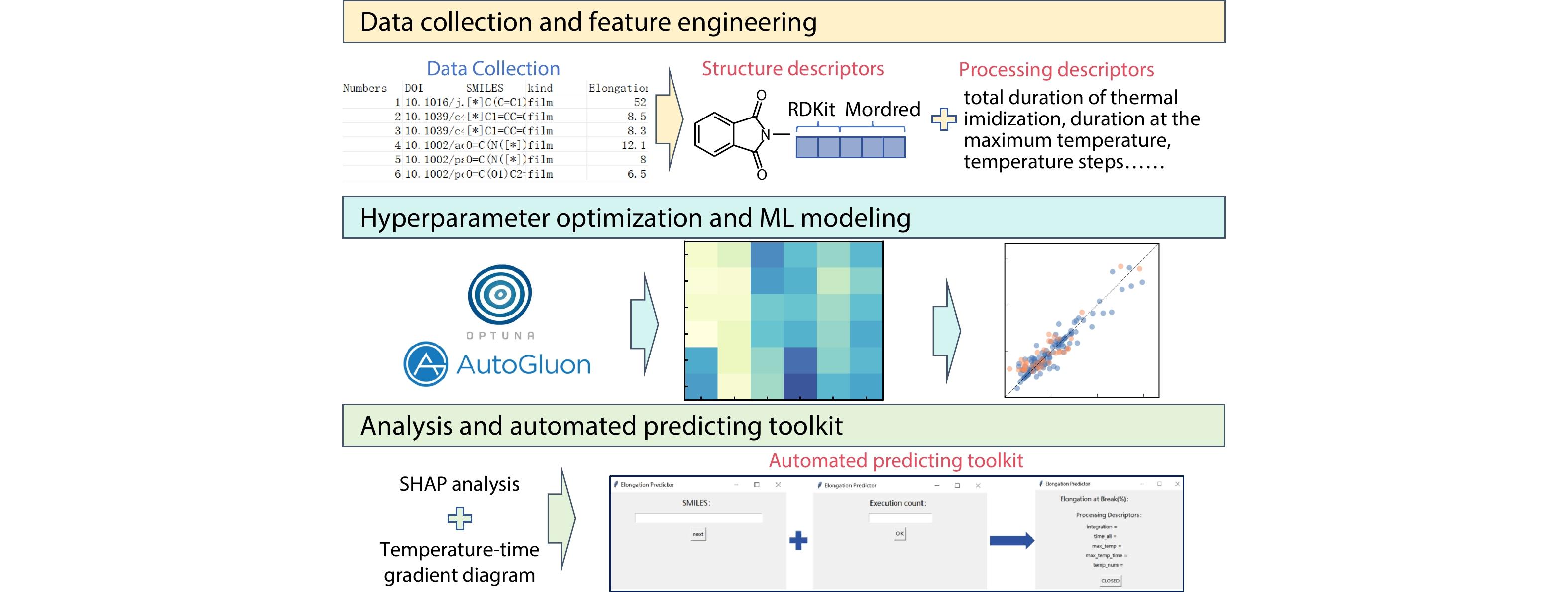
Polyimides (PIs) are widely used in industry owing to their excellent mechanical properties and thermomechanical stability, which depend not only on molecular structure but also on processing conditions. In this study, we present a machine-learning-based strategy for predicting and optimizing the mechanical properties of PI materials by explicitly incorporating processing information into predictive models. Three machine learning models were developed to evaluate PI structures together with thermal imidization parameters, with the aim of improving the prediction accuracy of mechanical properties and enhancing the interpretability of structure-processing-property relationships. By analyzing structural and processing descriptors, key factors influencing tensile strength, Young's modulus, and elongation at break were identified. The results indicate that, in addition to molecular descriptors, processing-related features plays a substantial role on multiple mechanical properties. Based on the trained models, we further developed an automated tool that accepts a SMILES representation of a PI structure as input and outputs the predicted mechanical properties along with the corresponding processing conditions associated with optimal performance. This work provides a data-driven framework for guiding PI material design and process optimization, and offers a practical basis for future experimental validation. Our proposed approach is readily extendable to other polymer systems and polymer composites where processing plays an important role in determining mechanical behavior.
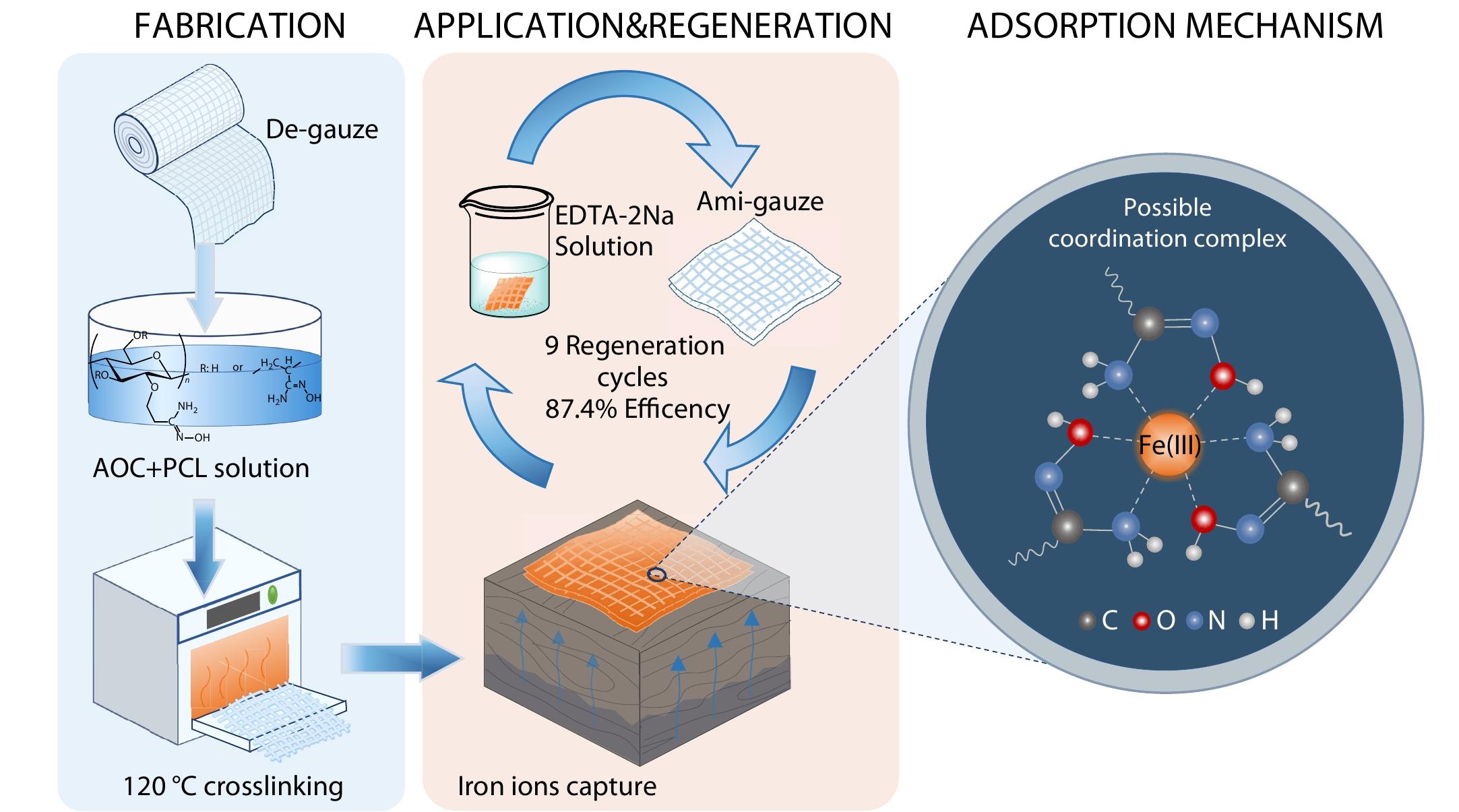
Amidoxime functionalized gauze (Ami-gauze) was prepared by a simple finishing process, in which the gauze was immersed in amidoxime cellulose and crosslinker solution and then dried. Ami-gauze has been used as an adsorbent for the conservation of marine wooden cultural relics to adapt to their irregular surfaces. This material capitalizes on the synergistic interaction between the hygroscopic properties of gauze and the metal-binding affinity of functional polymers, achieving superior efficiency in removing iron ions from degraded wooden artifacts. Notably, the composite retained more than 87.6% of its adsorption capacity after nine regeneration cycles through simple aqueous immersion, highlighting its operational simplicity and reusability. The cellulose-based adsorbent is cheap and scalable, which presents a promising solution for mitigating iron-induced degradation in marine archaeological artifacts.
There is an increasing demand for polyurethane (PU) elastomers that integrate high mechanical performance with environmental and economic sustainability to satisfy the demands of advanced applications. However, their development is hindered by a fundamental trade-off: enhancing strength typically compromises toughness, whereas incorporating self-healing capacity often diminishes mechanical robustness. To overcome this challenge, we present a strategy based on an ultrahigh-density hydrogen-bonded network formed at the interface between tannic acid-functionalized cellulose nanocrystals (TA@CNC) and waterborne polyurethane (WPU) matrix. This dynamically cross-linked architecture enables efficient energy dissipation and supports intrinsic self-healing, thereby simultaneously enhancing both mechanical performance and self-healing capacity. The resulting elastomer demonstrates outstanding overall performance, achieving a tensile strength of 48 MPa, an elongation at break of 2667%, a toughness of 700 MJ·m–3, a true fracture stress of 1319 MPa, and a room-temperature self-healing efficiency of 84%. The design strategy presented here opens new avenues for developing polyurethane elastomers with simultaneously enhanced mechanical performance and self-healing capacity, effectively paving the way for their application in demanding and sustainable scenarios.
Interactions between the intrinsically disordered protein α-synuclein (αS) and DNA are implicated in its pathological aggregation and neuronal function. However, the structural rules governing these interactions remain undefined. Through well-tempered metadynamics simulations across six distinct DNA sequence landscapes, we report a sequence-specific conformational switch in a single αS chain. While AT-rich sequences engage αS yet induce DNA duplex destabilization with minimal protein structuring, GC-rich tracts promote localized protein compaction and secondary β-sheet structure formation. Crucially, we identified a specific threshold: the presence of four or more consecutive G/C base pairs is both necessary and sufficient to nucleate the formation of a stable, intramolecular β-sheet within the N-terminal and nonamyloid component regions of the αS chain. This structured state, anchored by persistent protein-DNA contacts, is absent in shorter GC tracts or alternating sequences. In mixed-sequence contexts, the extended GC blocks function as exclusive binding hubs, dominating over interactions with adjacent AT-rich regions. This GC length-dependent conformational switch provides a precise biophysical mechanism through which the DNA architecture can spatially regulate αS folding, with potential implications for its aggregation propensity and regulatory functions in gene expression.
The development of intrinsically flame-retardant, low-smoke, low-toxicity, and halogen-free polymers represents a critical challenge. In this study, bio-based daidzein was employed as a partial phenolic source, and a series of main-chain benzoxazine resins (Dz-Ph-ddm) was synthesized via Mannich condensation with phenol, 4,4′-diaminodiphenylmethane, and paraformaldehyde. The effects of daidzein content on the thermal stability, flame retardancy, mechanical properties, and char-forming behavior of cured resins were investigated. The results indicate that the rigid aromatic structure and benzopyranone unit of daidzein significantly promoted the formation of a dense and continuous char layer, achieving gas- and condensed-phase synergistic flame retardancy. With 20 mol% of daidzein addition, the resin exhibited a glass transition temperature (Tg) of 259.6 °C, the char yield at 800 °C increased by 42.5% compared to the control group, a UL-94 V-0 rating, and a 30.9% reduction in total heat release (THR) in cone calorimetry tests. The glass fiber-reinforced composite prepared using this resin as the matrix showed a 100.6% improvement in impact strength, with flexural and compressive strengths reaching 748.4 and 340.8 MPa, respectively. Moreover, it demonstrated good fire safety performance even in an 80 kPa low-pressure combustion environment. This work provides a facile strategy for the preparation of high-performance eco-friendly flame-retardant composites.
We report a bioinspired, facile strategy for synthesizing melanin-like nanoparticles via highly selective room-temperature polymerization of levodopa (L-DOPA), a native eumelanin precursor, using benzoyl peroxide. This method overcomes traditional synthesis limitations, yielding poly(L-DOPA) with covalently incorporated benzoyl fragments, and demonstrates significantly enhanced ultraviolet absorption for advanced photoprotective applications.
To address the critical issue of volume expansion in silicon-based anode materials and enhance battery performance, a novel method for synthesizing microsized silicon carbonitride (SiCNO) ceramic particles was presented as a high-performance anode material for lithium-ion batteries. SiCNO ceramic microspheres were prepared via high-temperature pyrolysis of organopolysilazane microspheres (OPSZ MPs), which were synthesized via free radical polymerization of silazane oligomers initiated by azobisisobutyronitrile (AIBN). The SiCNO microspheres, serve as the active materials in lithium-ion batteries anode, demonstrated excellent electrochemical performance with an initial discharge-specific capacity of 1663.3 mAh·g–1 and 622.9 mAh·g–1 after 400 cycles at 1 A·g–1. These microspheres exhibited superior structural stability during the lithiation and delithiation processes, with a volume expansion of 25.46% during cycling. The enhanced performance can be attributed to their regular spherical structures and larger specific surface area, which improve the ion/electron transport and stress distribution. This study highlights the potential of synthesizing and regulating the morphology of SiCNO particles to improve the performance of anode materials for lithium-ion batteries, providing a balance between high electrochemical activity and structural stability.
The flame-retardant monomer PG (P) was synthesized from diethylphosphinic acid and glycidyl methacrylate (GMA). Simultaneously, the phosphorus-containing flame-retardant monomer, TAEP (T), was synthesized from phosphorus oxychloride and 2-hydroxyethyl acrylate. A 50 µm thick transparent UV-cured coating, designated MAAR-P8T4, was successfully constructed on 0.5 mm thick polycarbonate (PC) films by blending PG and TAEP with melamine acrylate resin (MAAR). The fabricated coating demonstrated a high transmittance of 91.9% in the visible-light spectrum. The incorporation of monofunctional PG effectively regulated the system viscosity and mitigated curing shrinkage stress. Furthermore, the synergistic action of phosphorus in different valence states and nitrogen from MAAR imparted a dual gas-phase-condensed phase flame-retardant mechanism to the coating, enabling the PC substrate to attain a V-0 rating in the UL-94 vertical burning test. This research indicates that the MAAR-P8T4 coating engineered via molecular design and component optimization concurrently overcomes the limitations of PC, namely its low surface hardness and inherent flammability. A straightforward and efficient preparation strategy provides a practical approach for transparent flame-retardant coatings for electronic and electrical applications.
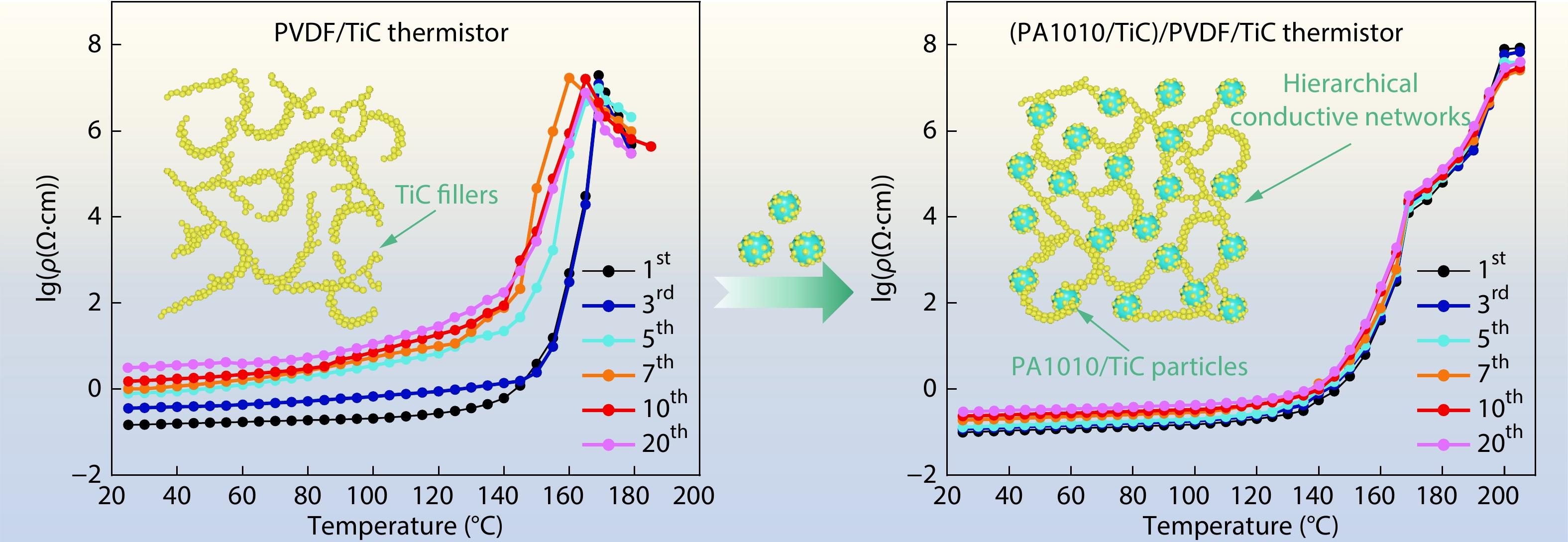
Adopting composite matrices has great significance for improving the performance of polymeric positive temperature coefficient (PPTC) materials. However, the uncontrollable selective distribution of fillers in different matrices induced by the differences in compatibility severely limits the flexible design and regulation of conductive networks. A solution-mixing strategy based on the solubility difference of polymer matrices in different solvents was employed to flexibly fabricate hierarchical PPTC composites, achieving the precise localization of conductive fillers. In the hierarchical structure, PVDF/TiC served as the first-level PTC material, whereas the PA1010/TiC particles acted as the other-level PTC material. The PA1010/TiC particles serving as relay stations also participated in the construction of the PVDF/TiC conductive network. Benefiting from the restriction effect of the PA1010/TiC particles for the PVDF chains and TiC fillers, the negative temperature coefficient (NTC) effect was effectively suppressed, and a maximum IPTC of 8.9 was obtained. Moreover, in cyclic testing, the PVDF phase crystallized posterior to the PA1010 phase, generating compression and releasing latent heat for the PA1010 phase, which synergistically reinforced the crystallization of the PA1010 phase, enabling rapid reconstruction of long-range conductive networks in the entire system. Therefore, the reproducibility and Ihold of the hierarchical PPTC thermistor were significantly improved. This strategy not only breaks the bottleneck of the selective distribution of fillers in the multi-matrix of PPTC materials, but also achieves dynamic control of hierarchical conductive networks, suggesting a new pathway toward the overall improvement of the performance of PPTC thermistors.
This study investigates the evolution of free-radical polymerization under spatially graded conditions by constructing a position-dependent reaction probability model. Given the strong temperature dependence of thermal initiators, spatial temperature variations significantly affect both local monomer reactivity and the macroscopic evolution of polymer structures. Understanding this coupling is crucial for designing gradient-controlled synthesis strategies. The dissipative particle dynamics (DPD) method was employed to investigate free radical polymerization under gradient temperature conditions. Increasing ΔT enhances spatial heterogeneity: high-temperature regions form dense networks with lower molecular weights (Mn and Mw) due to rapid initiation and frequent termination. In contrast, low-temperature regions yield higher molecular weights and expanded chain conformations (<$R_{\mathrm{g}}^2 $>) resulting from longer radical lifetimes. These structural differences further govern pore evolution: porosity decreases rapidly and reaches lower final values in high-temperature zones, while low-temperature regions exhibit delayed evolution but higher final porosity. This study demonstrates that the precise control of polymer growth orientation, molecular weight distribution, and porous morphology can be achieved by incorporating gradient conditions, thereby establishing a new paradigm for the targeted synthesis of gradient functional materials.
Poly(butylene carbonate) (PBC), a biodegradable aliphatic polycarbonate, is limited by its suboptimal thermal and mechanical properties. This study enhanced PBC by incorporating nanoscale nucleating agents combined with isothermal annealing and pre-stretching. The results indicate that the dispersion and interfacial interactions of different nucleating agents within the PBC matrix vary significantly. Among them, SiO2 demonstrate good dispersion and compatibility, effectively enhancing the storage modulus and crystallization kinetics. Isothermal annealing and pre-stretching treatments further synergistically improved the crystallinity and mechanical performance of the composites: after annealing, the tensile strength of PBC/SiO2 increased to 61.96 MPa, and after pre-stretching, it reached 83.26 MPa. Dynamic mechanical analysis and differential scanning calorimetry results consistently show that the incorporation of nucleating agents raises the glass transition temperature and thermal stability of the materials. This research provides systematic experimental evidence and process optimization strategies for the high-performance modification of PBC.
Conductive hydrogels, with their excellent flexibility and tunable electrical conductivity, have shown broad application prospects in emerging fields such as flexible strain sensors and triboelectric nanogenerators (TENG). In this study, a conductive sodium carboxymethyl cellulose (CMC)/ polypyrrole (PPy)/polyacrylamide (PAM)(CPA) hydrogel was developed by integrating a CMC/PPy composite, synthesized via in situ polymerization, into a hydrophobic-associated polyacrylamide network. This hydrogel exhibits excellent mechanical properties, with a tensile strain as high as 1735%, demonstrating extremely high ductility and deformation capacity. The flexible sensor based on CPA hydrogel has a wide detection range (0%−500%) and can monitor the movements of various parts of the human body. In addition, the TENG assembled based on CPA hydrogel achieves stable electrical output performance, enabling it to power small wearable electronic devices and promote self-powered signal transmission, showing broad application prospects in the fields of intelligent human-machine interaction and wearable electronics.
Epoxy resin (EP) is one of the most promising thermosetting resins used in engineering applications; however, its intrinsic drawbacks of poor abrasion resistance and flame retardancy limit its long-term application in harsh environments. In this study, to improve the comprehensive properties of EP, a prospective four-in-one strategy was proposed to prepare composites by rationally introducing multifunctional nanofillers. First, phosphorus- and nitrogen-enriched nickel/iron bimetallic phyllosilicates (PN-NiFePS) were facilely synthesized and subsequently incorporated into EP to prepare high-performance composites. The results indicate that PN-NiFePS nanoparticles display unique rice-grain-shaped morphologies with rough surfaces, as numerous PN-NiFePS nanosheets were vertically grown on the crystalline surface of the metal-organic framework. The chemically grafted P/N-containing pendant chains enabled well-bonded polymer-filler interfaces and homogeneous dispersion, significantly enhancing the mechanical properties. With the increase filler concentration, the wear rate exhibits a trend of initial decrease followed by subsequent increase, reaching a minimum of 1.19×10⁻⁶ mm3/(N·m) by adding 1% PN-NiFePS, which is 72% lower than pure EP. The incorporated PN-NiFePS endowed the composites with improved flame retardancy, leading to a steady increase in the limiting oxygen index and excellent self-extinguishing during combustion. This study provides an ingenious engineering strategy for constructing cross-function-integrated polymer composites suitable for harsh environments.
Regulation of the microphase-separated structure is critical for high-performance thermoplastic polyurethanes (TPUs). To address the limitations of poor heat resistance and reliance on petrochemical resources in traditional TPUs, bio-based TPUs were engineered using rigid 1,4-phenylene diisocyanate and bio-based poly(trimethylene ether) glycol. The results demonstrate that microstructural evolution, hydrogen bonding network formation, and tailoring of macroscopic properties in TPUs can be realized by varying the hard segment content. Increasing the hard segment content enhanced microstructural ordering, boosting the tensile strength from 6.1 MPa to 22.6 MPa while maintaining an elongation at break above 600%. Crucially, the robust crystalline network enhanced thermal stability of the TPUs, resulting in a maximum 5% thermal deformation temperature of 230.2 °C for TPUs. This work elucidates the structure-property relationships governing microphase separation, empowering the rational design of bio-based materials with exceptional toughness and thermal resistance.
The foam materials used in cushioning and protective applications often face a trade-off between flame retardancy and energy absorption. Ethylene-vinyl acetate (EVA) foams are lightweight, flexible, and highly flammable, which restricts their broader engineering applications. In this study, a multifunctional additive, silane-modified zinc ion–reinforced melamine phosphate (ZnMP), was developed via in situ ion complexation and surface grafting to overcome the incompatibility between flame retardancy and mechanical performance in conventional intumescent systems. Compared to pristine melamine phosphate (MPP), ZnMP forms a coordinated structure through Zn2+ interactions with nitrogen- and phosphorus-containing groups. When incorporated into the EVA foams at 15 wt%, ZnMP acted as an efficient heterogeneous nucleating agent, generating a dense microporous structure. Meanwhile, the silane coupling agent enhanced the interfacial interaction between the ZnMP and the EVA matrix, enabling effective reinforcement. Consequently, the EVA/ZnMP foam exhibited significantly improved mechanical properties, including a 144.3% increase in storage modulus, 21.4% increase in energy adsorption, and 88.6% cyclic compression retention after 10 cycles (80% strain). In addition, Zn2+ promoted the formation of a compact char layer during combustion, leading to excellent flame-retardant performance with a limiting oxygen index (LOI) of 25.3%, UL-94 V-0 rating, and a 41.0% reduction in the peak heat release rate. This ion-coordination and interfacial modification strategy offers a promising route for developing lightweight EVA foams with balanced mechanical reinforcements and flame-retardant properties for cushioning and protective applications.
To address the limited toughness of poly(ethylene terephthalate) (PET) monofilaments arising from the inherent molecular chain rigidity, this study prepared PET/poly(butylene terephthalate) (PBT) blend monofilaments via the melt-blend spinning method to enhance their toughness. The influence of PBT content on the structural evolution and properties of the blend system was systematically investigated. These results indicate that the PBT content significantly influences the extent of transesterification and compatibility, thereby dictating the mechanical behavior of the monofilaments. At a low PBT content of 2 wt%, transesterification was negligible. The monofilaments exhibited a uniform radial gradient orientation without a distinct skin-core structure, demonstrating optimal overall mechanical performance with markedly improved strength. Specifically, the tensile, loop, and knot strengths were 611, 421, and 443 MPa, respectively. When the PBT content exceeded 5 wt%, the flexible chain segments of PBT enhanced the molecular chain mobility in the blend chips, leading to an increase in crystallite size. However, intensified transesterification concurrently reduces the crystallizability and degrades the mechanical properties. At PBT contents above 15 wt%, SEM analysis revealed phase separation and pronounced heterogeneity in the radial gradient structure of the blend monofilaments, resulting in a significant deterioration of the mechanical properties. This study elucidates the pivotal role of blending ratio in governing the “composition-structure-property” relationship of PET/PBT-blended monofilaments, revealing the underlying mechanism of transesterification and gradient structure development. These findings provide a theoretical foundation for the design of high-performance PET monofilaments.
In this study, the weathering resistances of glass-fiber-reinforced polymer G1 and two types of carbon-fiber-reinforced polymers, C1 and C2, were studied after six years of outdoor exposure in various climatic zones. Interlaminar shear tests were conducted at strain rates that differed by four orders of magnitude, and dynamic mechanical analyses of these materials were performed both initially and after weathering. Thermal activation analysis of the interlaminar shear test results was used to determine the thermodynamic strength parameter, Psh and durability of the materials. It has been demonstrated that the greatest reduction in the service life of the materials occurs after exposure to the hot and humid climate of Gelendzhik.
We present a method for modifying metal organic frameworks (MOFs) surface functionalization using metal-free atom transfer radical polymerization (ATRP). Amino-functionalized zeolitic imidazolate frameworks-8 (ZIF-8-NH2) was synthesized at room temperature, and ZIF-8-Br was obtained by the reaction of the amino group in ZIF-8-NH2 with the acyl bromide group in 2-bromoisobutyl bromide (BIBB), thereby introducing secondary bromine groups onto the surface of ZIF-8-NH2. Then, ZIF-8-g-poly(methyl methacrylate) (ZIF-8-g-PMMA) hybrid materials were synthesized using ZIF-8-Br as an initiator via surface-initiated metal-free atom transfer radical polymerization (metal-free ATRP). The structural and morphological evolutions were monitored using Fourier transform infrared spectroscopy (FTIR), X-ray photoelectron spectroscopy (XPS), X-ray powder diffraction (XRD) and scanning electron microscopy (SEM) measurements. Thermogravimetry (TG) analysis verified that ZIF-8-g-PMMA had excellent thermal stability, and the water stability test demonstrated that after grafting PMMA from the ZIF-8-NH2 surface, the hydrophobicity and water stability were improved significantly. The BET results proved that ZIF-8-g-PMMA had a high specific surface area of 835.24 m2/g. By immobilizing ZIF-8-g-PMMA hybrid material on fabrics, the modified fabrics exhibit excellent superhydrophobicity, with the water contact angle as high as 159.2o. Attributed to the synergistic effect of the micro- and nano-graded porous structure and low-surface-energy PMMA coatings, ZIF-8-g-PMMA hybrid material modified fabrics achieves highly efficient oil-water separation, with excellent adsorption effects on both light and heavy oils. Among them, the heavy oil can pass through the modified fabric within seconds with an oil-water separation efficiency of 96%. This method will further expand the scope of application of metal-free ATRP technology and MOFs materials.