Ming Wang, Ye Yao, Hui Zhao, Wei-Long Ju, Yun-Lan Su, Du-Jin Wang, Guo-Ming Liu
2026, 44(1): 1-12. DOI: 10.1007/s10118-025-3508-2
Published(online):2026-01-13
Abstract
Full text
网络PDF
Abstract
This feature article reviews recent advances in polymer nucleation under confined and interface-dominated conditions, focusing on anodic aluminum oxide (AAO) templates and nanocomposites containing nanoparticles or nanosheets. The interplay of finite-size and interfacial effects gives rise to distinctive phenomena, including homogeneous nucleation, surface nucleation, prefreezing, and supernucleation.
This work demonstrates the covalent immobilization of pH-responsive dyes onto solid substrates. The resulting material exhibits a clear and reversible pH-responsive color transition ability. This stable and reusable colorimetric system holds promise for applications in sensors and visual pH monitoring, enabling simple and effective detection.
In this study, a bio-based poly(ethylene 2,5-furandicar-boxylate) (PEF) copolymer was illustrated, integrating intrinsic flame retardancy (UL-94 V-0), exceptional impact toughness (14.7 kJ/m2), and UV shielding via phosphorus-containing segments, overcoming traditional flame retardant trade-offs.
Ultrasound (US)-triggered coumarin derivatives generate superoxide anion radicals (•O2−), reducing Pt(IV) prodrugs to cytotoxic Pt(II) drugs. A nanoprodrug (P-cisPt(IV)@5-MOP) co-delivered both agents, thus enabling dual-drug chemotherapy. It achieves 90.9% tumor inhibition in vivo with a 40% cure rate and low systemic toxicity via controllable activation.
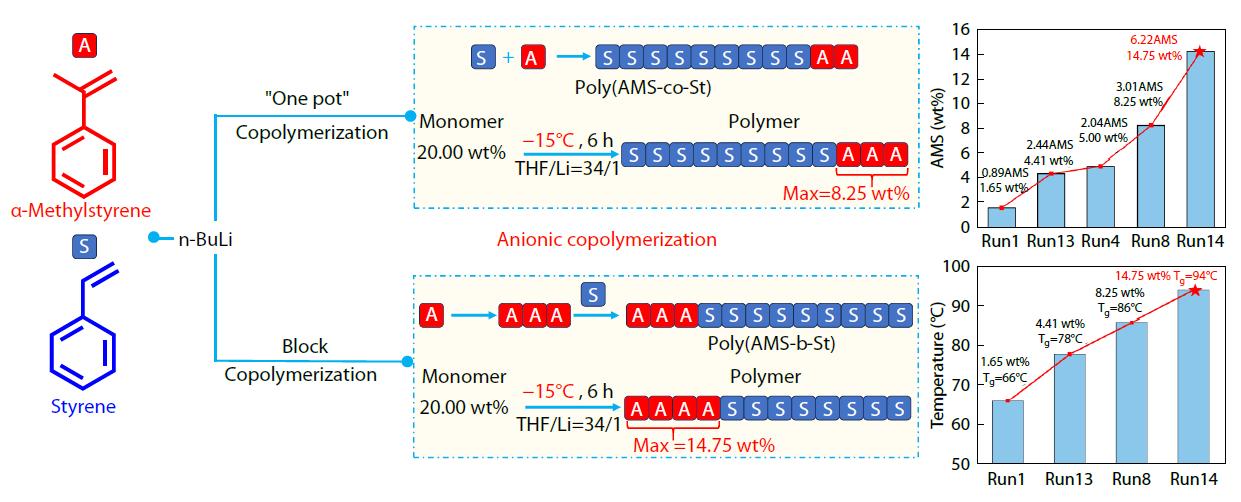
The anionic copolymerization of α-methylstyrene (AMS) and styrene (St) was investigated under mild conditions (−25 °C to 25 °C). Using a stepwise feeding strategy to suppress depolymerization enabled efficient AMS incorporation, resulting in a single, composition-dependent Tg that enhanced the heat resistance of polystyrene (PS).
Switchable polymerization constructs block copolymers directly from monomer mixtures, yet is limited to switch between two predetermined polymerizations and deliver products with fixed sequences. Here, a programmable switchable polymerization was demonstrated by modulating the ratio of triethylborane/1,8-diazabicyclo[5.4.0]undec-7-ene (Et3B/DBU) to synthesize four different block copolymers from same monomer mixtures.
This study presents a novel method for quantifying the phenolic hydroxyl content in poly(phenylene oxide) using differential UV absorption spectroscopy. The approach exploits the substantial increase in absorbance at 300 nm in alkaline solutions, providing a precise and straightforward technique with distinct advantages over conventional methods.
Processability and structure of dynamically modified four linear low-density polyethylenes (LLDPEs) with different branch contents using peroxide were investigated. It was found that, all samples were processable, and higher short-chain branch content led to better flowability, less cross-linked fractions, and lower grafting ratio of peroxide radicals onto the chains.
This study prepared an intrinsically conductive polyurethane sensor (FPHP) by grafting acetylferrocene-polyaniline groups onto HTPB. The sensor exhibits a high strain capacity of 254%, a gauge factor (GF) of 19.66, and a large range of strain sensing capabilities. FPHP enables human motion monitoring via a stable strain-current response.
A flexible dielectric (εr=1415, tanδ=0.380, 100 Hz) is achieved through in situ controllable reduction of graphene oxide (GO) in a poly(vinylidene fluoride-trifluoroethylene-chlorofluoroethylene) (P(VDF-TrFE-CFE)) matrix, arising from optimized electron conjugation, controlled charge migration, and uniform filler dispersion via micro-interactions.
Multi-scale carbon fibers (CFs) can give full play to their respective advantages under certain ratios, thus achieving a significant improvement in the comprehensive performance of polyphenylene sulfide/irradiationtreated polytetrafluoroethylene (PPS/i-PTFE). Tribological tests at high PV (pressure × velocity) verified the viability of the composite in a demanding service environment.
By incorporating a cationic monomer into the cross-linked polymer framework, we introduced electrostatic interactions that enhance the polymer’s affinity for bilirubin, resulting in outstanding adsorption performance and demonstrating its potential as an effective hemoperfusion adsorbent.
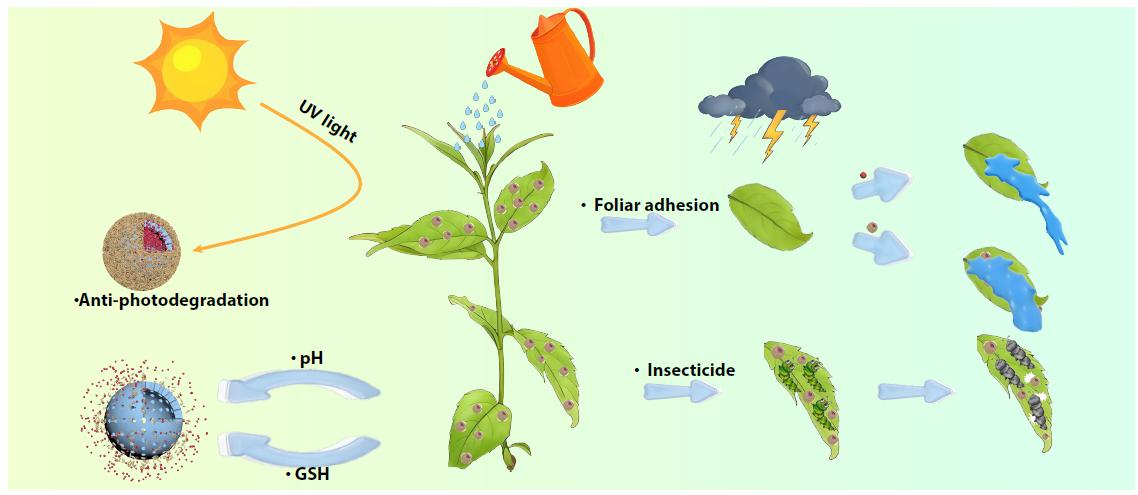
A pH/GSH dual-responsive nanopesticide system (Abamectin-HMONs@PAA) was developed for smart delivery. It exhibits enhanced photostability, controlled release in acidic/reducing environments, improved leaf adhesion,and superior insecticidal efficacy against Plutella xylostella, promoting sustainable crop protection.
This study analyzes two types of functionally graded lattice structures, Schwarz P and BCC, for use in below-knee prosthesis dampers. A 3×3 design of experiments varied wall thickness and cell size. Optimization via Response Surface Methodology and finite element analysis identified optimal lattice parmeters for improved prosthetic performance.
The ketal-containing cross-linked polyurethane elastomers were prepared using cyclic ketal diol as a chain extender. As the soft segment length increases, the hard-soft hydrogen bonding decreases, while the hard-hard hydrogen bonding increases. As a result, the dielectric constant shows a decreasing trend, and the dielectric loss also gradually decreases.
A mussel-inspired hydrogel incorporating polydopamine (PDA), polypyrrole (Ppy), polyaniline (PANi) and poly(vinylalcohol) (PVA) within a polyacrylamide (PAM) network delivers high transparency (about 90%), electrical conductivity (about 95.4×10⁴ S/cm), tensile strength (about 32.6 kPa), and rapid self-healing (about 48% recovery in 1 h at 50 °C). It functions effectively as a flexible, wearable strain sensor with GF of approximately 7.44.
Bio-based toughening flame retardant (PA-DAO) synthesized by a one-step neutralization method using phytic acid (PA) and 1,8-diaminooctane (DAO) at room temperature. Incorporation of 25 wt% PA-DAO increased the limiting oxygen index from 20.5% to 28.1% and achieved a UL-94 V-0 rating, concomitant with a 71% reduction in PHRR and 53% suppression of total smoke production (TSP).
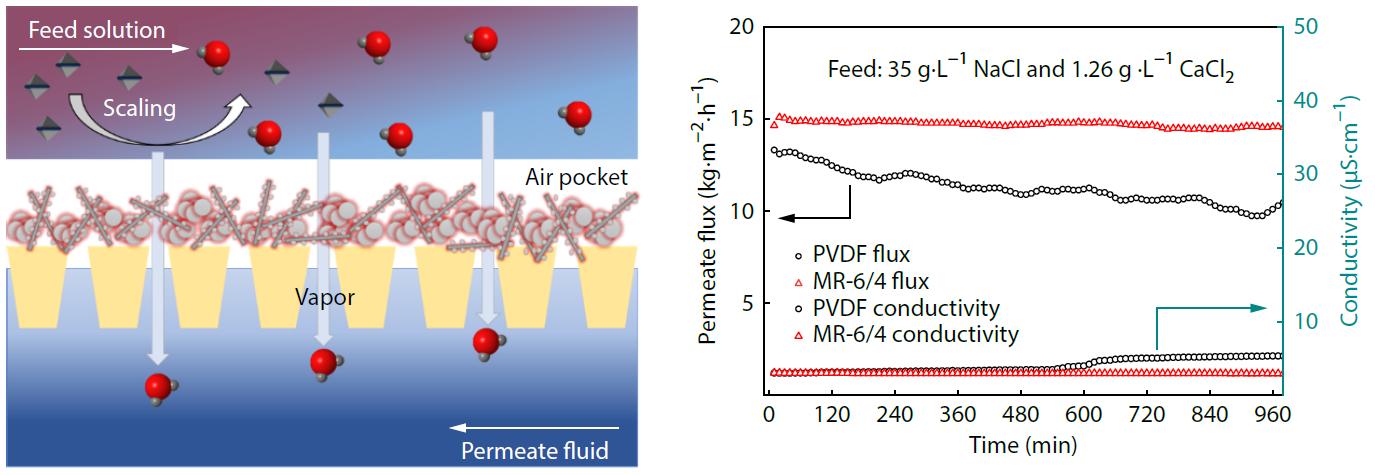
This study presents a one-step spraying strategy for fabricating a superhydrophobic composite membrane, significantly simplifying the preparation process. The resulting membrane demonstrates superstability and excellent scale resistance during membrane distillation (MD) tests, highlighting its strong potential for durable and efficient MD applications.
When recycled wasted rubber (WR) is subjected to external stress, the loads are redistributed across a broad region of adjacent regions instead of being concentrated on a limited length scale, which resists crack propagation.
This study employs molecular dynamics simulations to visually elucidate the dynamic bond exchange processes in vitrimers. It investigates the coupling between bond exchange kinetics and segmental dynamics, as well as the dynamic heterogeneity induced by varying bond exchange rates.
Machine learning-assisted formulation optimization of multicomponent composites offers an efficient and effective alternative to traditional trial-and-error experiment.
Molecular dynamics simulations uncover the microscopic origin of the second stress overshoot σ2max in two-step shear. The nonmonotonic σ2max results from coupled variations of tube orientation and entanglement number, highlighting the need for a unified theoretical framework.
Polyetheretherketone (PEEK) exhibits a superior hydrogen barrier performance over polytetrafluoroethylene (PTFE). Our integrated study reveals an enthalpy-driven mechanism: strong non-covalent interactions enhance solubility but create kinetic traps that severely suppress diffusion. This provides a new, enthalpy-based strategy for designing advanced barrier materials.
Friction rearranges polyethylene chains, creating gaps. Hydrated ions and water clusters diffuse into ultra-high molecular weight polyethylene (UHMWPE) substrate, further disentangling the polyethylene chains under friction. Rigid hydrated ions exert a stronger effect than water clusters.