Ming Wang, Ye Yao, Hui Zhao, Wei-Long Ju, Yun-Lan Su, Du-Jin Wang, Guo-Ming Liu
2026, 44(1): 1-12. DOI: 10.1007/s10118-025-3508-2
Published(online):2026-01-13
Abstract
Full text
L-PDF
Abstract
Nucleation, which is the initial step of crystallization, critically governs the polymer crystallization behavior, influencing the crystallization temperature, kinetics, and morphology. However, the direct observation of the nucleation process in polymers remains elusive owing to spatial and temporal resolution limitations. This feature article summarizes the recent progress in understanding polymer nucleation within confined and interface-dominated environments, focusing on three representative systems: anodic aluminum oxide templates and nanocomposites containing nanoparticles or nanosheets. The interplay between finite size and interfacial effects has revealed some novel phenomena, such as homogeneous nucleation, surface nucleation, prefreezing, and supernucleation.
Responsive colorimetric materials exhibit significant potential for application in fields such as smart food packaging and wound monitoring. The functional integration of pH-indicators with material carriers enables breakthrough applications in nontraditional domains. In this study, we developed a novel material covalently grafted with a pH indicator that exhibited naked-eye pH-responsive color shifts. The covalent grafting of pH-responsive bromothymol blue onto carboxymethyl cellulose (CMC) was confirmed using advanced characterization techniques, including Fourier transform infrared spectroscopy and X-ray photoelectron spectroscopy. The pH-sensitive chromophore was covalently immobilized onto the CMC matrix through esterification, thereby establishing firm chemical conjugation. Moreover, a superior color-changing performance was achieved within several minutes in response to different pH values. The reusability and stability of this material offer distinct advantages over single-use pH test strips. pH-responsive colorimetric materials hold promise for efficient, noninvasive monitoring in intelligent packaging (food freshness), medical diagnostics (wound status, infections), biosensing, and environmental applications.
As the global textile industry has accelerated its transition to a circular economy, iterative innovation in regenerated cellulose fibers has become a key industry focus. With viscose fiber having been industrialized for over a century and lyocell fiber gaining market recognition because of its environmentally friendly process, which is the next regenerated cellulose fiber. Herein, ionic liquids with low vapor pressure, nonflammability, relatively simple recovery, and high dissolution efficiency were used to fabricate regenerated cellulose fibers. The viscose and lyocell properties of the fibers were systematically compared, including microscopic morphology, dyeing behavior, fibrillation resistance, mechanical properties, yarn-forming capacity, and fabric performance. The ionic liquid (IL) fiber exhibited a smooth surface and circular cross-section, with the highest tensile strength, moderate dyeing and fibrillation properties, and similar spinning and weaving performance. This work can provide a reference for the commercial application of regenerated cellulose fibers fabricated from ionic liquid.
Bio-based 2,5-furandicarboxylic acid polyesters offer significant promise for reducing energy and environmental crises. However, their intrinsic flammability remains a critical limitation, and conventional flame-retardant strategies often compromise their mechanical properties, hindering their practical applications. Herein, a 9,10-dihydro-9-oxa-10-phosphaphenanthrene-10-oxide (DOPO)-based comonomer (DDP) was used to synthesize flame-retardant poly(ethylene furandicarboxylate-co-phosphaphenanthrene) (PEFDn). The covalent integration of DDP confers intrinsic flame retardancy, avoiding the plasticization and migration issues associated with additive-type systems. Upon thermal decomposition, the DOPO-derived moieties release phosphoric acid and radical scavengers, promoting char formation and suppressing flame propagation. Furthermore, density functional theory (DFT) calculations combined with non-covalent interaction (NCI) analysis revealed that DOPO dimer molecules adopt a stable parallel-displaced π–π stacking configuration, potentially facilitating microphase separation and enhancing the energy dissipation capability. PEFD10 achieves a UL-94 V-0 rating while simultaneously increasing impact toughness from 1.5 kJ/m2 to 14.7 kJ/m2. Importantly, PEFDn maintained acceptable oxygen-barrier properties. PEFD10 also exhibited high transparency and UV-shielding performance. The combination of intrinsic flame safety, impact-toughness resistance, UV shielding, and an oxygen barrier ensures reliable protection of electrical components and long-term operational stability. The integration of multiple critical properties within a single bio-based material represents a novel approach for enabling sustainable polymer solutions for high-performance electrical applications.
Given that platinum-based drugs are widely used clinically as chemotherapeutic agents, their severe toxic side effects have attracted significant attention. Consequently, the development of novel nanoprodrugs based on low-toxicity tetravalent platinum (Pt(IV)) complexes holds substantial research value. Herein, we discovered that coumarin derivatives exhibit inherent antitumor efficacy and significantly enhance superoxide anion radicals (•O2−) generation in aqueous solutions under ultrasound (US) irradiation. Given that •O2− is known to mediate the reduction of Pt(IV) to divalent platinum (Pt(II)), we engineered an US-responsive dual-drug nanoprodrug (P-cisPt(IV)@5-MOP). This nanoprodrug was prepared by covalently conjugating Pt(IV) and methoxy polyethylene glycol hydroxyl (mPEG-OH) to a poly(L-glutamic acid) (PLG) carrier, followed by encapsulating coumarin derivatives. Under low-intensity US irradiation (1.5 W/cm2, 1 MHz, 10 min), P-cisPt(IV)@5-MOP achieved a Pt(IV) reduction rate of 91.4%. Furthermore, upon US exposure, its half-maximal inhibitory concentration (IC50) against 4T1 breast cancer cells decreased dramatically from 25.7 μmol/L to 0.1 μmol/L. Remarkably, this system combined with US therapy yielded a tumor inhibition rate of 90.9%, with 40% of tumor-bearing mice achieving complete eradication of tumors, while exhibiting low systemic toxicity. Collectively, this work not only identifies a novel sonosensitizer capable of generating •O2− but also develops a new class of ultrasound-activatable Pt(IV) nanoprodrug.
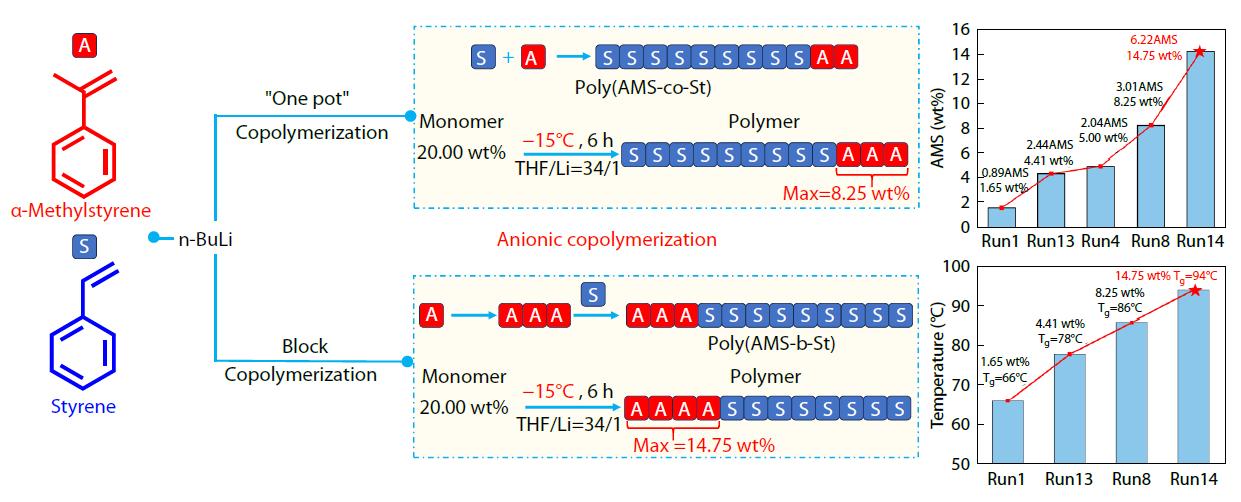
An effective strategy for enhancing the heat resistance of polystyrene (PS) with regard to its glass transition temperature (Tg) involves the anionic solution copolymerization of α-methylstyrene (AMS) with styrene (St), typically requires much lower temperature (−25 °C) and multi-step monomer feeding to achieve higher number-average molecular weight (Mn) block copolymers. However, the anionic copolymerization of AMS and St under the mild temperature remains largely unexplored. This study systematically investigated the anionic copolymerization of AMS and St using n-BuLi in nonpolar solvent (−25 °C to 25 °C) through both one-step and two-step approaches. We demonstrated that one-step copolymerization at 25 °C yielded only 1−3 terminal AMS units, with higher feed ratios (5 wt%−20 wt%) increasing AMS incorporation but reducing the exact molecular weight (MW) due to enhanced depolymerization, as evidenced by MALDI-TOF MS. Temperature-controlled AMS conversion at −15 °C achieved 98% AMS conversion (5 wt% feed) by suppressing side reactions and lowering the [M]ₑ, while 50 °C (near Tc) almost prevented incorporation. Despite t-BuOK regulation induced broader PDI (1.24) via reactive [(polymer-Li)OR]K intermediates, while other systems showed narrow distributions, t-BuOK outperformed THF in enhancing AMS incorporation via efficient ion pair dissociation. In comparison, the two-step polymerization approach demonstrated superior performance, achieving both higher AMS conversion efficiency and preferential incorporation at the initiation end. At a 20 wt% AMS feed ratio, this method yielded copolymer chains containing up to 6 AMS units on average. Thermal analysis revealed a composition-dependent single Tg, which exhibited a systematic increase with higher AMS incorporation content. These results collectively demonstrate the precise control over AMS incorporation and heat resistance achievable through the manipulation of polymerization conditions.
Switchable polymerization is emerging as a powerful tool to construct block copolymers directly from mixtures of monomers. However, current achievements typically iterate between two polymerization cycles to afford products with fixed sequences and compositions. Herein, we report the triethylborane/1,8-diazabicyclo[5.4.0]undec-7-ene (Et3B/DBU) pair-mediated four-component switchable polymerization of propylene oxide (PO), CO2, phthalic anhydride (PA), and racemic lactide (rac-LA), which enables the on-demand synthesis of four different block copolymers, i.e., poly(propylene phthalate)-b-polylactide (PPE-b-PLA), PPE-b-PLA-b-poly(propylene carbonate) (PPC), PPE-b-PPC-b-PLA, and PPE-b-PPC-b-poly(propylene oxide) (PPO), through rationally modulating the Lewis pair (LP) ratio. Core to this protocol is that increasing the loading of Et3B accelerates the ring-opening of PO while impeding the reactivity of rac-LA, thus allowing for fine-tuning of the thermodynamic and kinetic of the switchable polymerization. Therefore, the four polymerization cycles involving PO/PA ring-opening copolymerization (ROCOP), PO/CO2 ROCOP, rac-LA ring-opening polymerization (ROP), and PO ROP can be connected and discriminated in precisely programmed manners.
Poly(phenylene oxide) (PPO) exhibits excellent dielectric properties, making it an ideal substrate for high-frequency, high-speed copper-clad laminates. The phenolic hydroxyl group at the end of PPO plays a key role in its reactivity. Accurately quantifying the phenolic hydroxyl content in PPO is essential but challenging. In this study, we proposed a method for measuring the phenolic hydroxyl content of PPO using differential UV absorption spectroscopy. In alkaline solutions, the phenolic hydroxyl in PPO completely ionizes to form phenoxide ions, leading to a significant increase in UV absorbance at approximately 250 and 300 nm. Notably, the differential UV absorbance at approximately 300 nm was directly proportional to the phenolic hydroxyl concentration. Using 2,6-dimethylphenol as a standard, a calibration curve was established to relate the phenolic hydroxyl concentration to differential UV absorbance at approximately 300 nm, providing a precise and straightforward method for phenolic hydroxyl quantification in PPO with distinct advantages over conventional techniques.
Dynamic melt modification of polyethylene via the direct grafting of peroxide fragments shows promise for the development of processable functionalized materials. In this study, four linear low-density polyethylenes (LLDPEs) with comparable molecular weights but different short-chain branch (SCB) contents (ranging of 5–66 per 1000 carbon atoms) were modified via dynamic melt mixing using 2 wt% benzoyl peroxide at 145 °C and 50 r/min for 30 min. The influence of SCB content on the processability and structure of the resulting products was systematically investigated. All modified products exhibited good melt processability with melt flow rates (MFR) ranging from 0.46 g/10min to 1.07 g/10min. Products derived from low-SCB LLDPEs showed a lower MFR, higher cross-linking content, a larger number of long-chain branches, and a higher degree of benzoyl grafting. In contrast, those produced from high-SCB LLDPEs exhibited improved processability, reduced cross-linking, fewer long-chain branches, and lower benzoyl grafting levels. A detailed structural investigation of the soluble and insoluble fractions, which were separated using trichlorobenzene fractionation, was conducted to analyze the structural features of various modified products and demonstrate that the SCB content (i.e., tertiary carbon density) significantly influences radical coupling during dynamic modification. Elevated tertiary carbon density, by introducing greater steric hindrance, suppresses radical coupling during dynamic modification, thereby reducing the efficiency of both crosslinking and peroxide fragment grafting. These findings provide new insights into the structure-reactivity relationships in peroxide-induced polyethylene modification and lay the foundation for tailoring material properties via dynamic processing.
The development of intrinsically conductive piezoresistive sensors with high strain tolerance has garnered significant interest. While elastomeric polymers exhibit excellent strain capabilities, their utility in sensing applications has been limited by inherent challenges such as high electrical resistivity, poor aging resistance, and interfacial incompatibility. To address these limitations, hydroxyl-terminated polybutadiene (HTPB)-based polyurethane was chemically modified with acetylferrocene-polyaniline conductive moieties to enhance charge transport properties. Remarkably, this covalent functionalization endowed the resulting ferrocene-polyaniline hybrid polyurethane (FPHP) with a conductivity of 2.33 nA at 1 V bias while preserving piezoresistive functionality. The FPHP demonstrated exceptional mechanical-electrical performance, achieving 254% elongation at break with strain-dependent gauge factors of 7.28 (0%–12.5% strain, R2=0.9504) and 19.66 (12.5%–35.0% strain, R2=0.9929). Further characterization revealed a rapid 0.60 s response time and stability over 3500 strain-release cycles at compression strain, underscoring its durability under repetitive loading. The FPHP sensor was capable of monitoring various human movements and recognizing writing signals. These advances establish a materials design paradigm for fabricating flexible sensors that synergistically integrate high deformability, tunable sensitivity, and robust operational stability, positioning FPHP as a promising candidate for next-generation wearable electronics and soft robotics.
Polymer matrix composites with high dielectric constants and low dielectric losses are in high demand for flexible electronics. However, simultaneously satisfying these requirements poses a significant scientific challenge owing to the intrinsic trade-off relationship. Herein, we utilized the in situ controllable reduction of graphene oxide (GO) within a poly(vinylidene fluoride-trifluoroethylene-chlorofluoroethylene) (P(VDF-TrFE-CFE)) matrix to regulate the dielectric properties. The as-obtained composite exhibited a high relative dielectric constant of 1415 coupled with a low loss tangent of 0.380 at 100 Hz. Experimental and theoretical studies indicate that the increased degree of electron conjugation and conductivity of the reduced GO (RGO) are responsible for the high-k. The constrained reduction degree of GO, combined with its homogeneous dispersion in the polymer matrix, effectively suppresses long-range charge carrier migration, thereby minimizing dielectric loss. This novel strategy could be successfully applied to both organic and aqueous systems. Furthermore, a high-performance flexible capacitive proximity sensor was exemplified by the optimization of both the dielectric layer and electrode pattern, exhibiting excellent sensitivity and stability. The fundamental mechanisms elucidated in this study provide crucial design principles for developing dielectric PMCs with tailored properties, thereby opening new avenues for advanced flexible electronic applications.
Owing to their good biocompatibility, polysaccharide hydrogels have broad application prospects in the field of flexible strain sensors. However, there are still significant challenges in the preparation of polysaccharide hydrogels with good mechanical properties. MCA-LiCl hydrogels were prepared by introducing methacrylated hyaluronic acid (MeHA) into the polymer network in the presence of acrylic acid (AA), acryloyloxyethyltrimethyl ammonium chloride (CATAC), and metal ions. The polymer network not only has a chemically cross-linked network and a tough network structure, but also benefits from a variety of supramolecular interactions, such as hydrogen bonding and coordination covalent bonding, resulting in excellent mechanical properties, with an elongation at break of 1390%, a tensile strength of up to 1200 kPa, a toughness of 9.4546 MJ/m3, and adhesive properties towards various substrates. At the same time, the hydrogel has a high conductivity (5.33 mS/cm) and high strain-sensing sensitivity (Gauge factor=2.55). The flexible strain sensor assembled from the prepared MCA-LiCl hydrogel can be used to detect human movements, from micro-expressions (smiles, swallowing) to pulse signals and other physiological activities, as well as large-scale joint movements (wrists, elbows, knees, fingers, etc.), realizing the real-time monitoring of full-scale human movements. The prepared hydrogels have potential applications in wearable devices, electronic skin, and strain-sensor components.
To address the poor mechanical performance and improve the tribological properties of self-lubricating polyphenylene sulfide/irradiation treated polytetrafluoroethylene (PPS/i-PTFE) blends, different aspect ratio carbon fibers (i.e., PSCF: 50, SCF: about 429) were introduced as reinforcement fillers. The results showed that the hybriding of PSCF and SCF at certain mass ratios exhibited simultaneous enhancement of mechanical and tribological performance for PPS/i-PTFE blend through the construction of synergistic lubrication and mechanical interlocking network. Specifically, the flexural strength and modulus of PPS/i-PTFE were increased by 125.6% and 389.3%, the friction coefficient and specific wear rate were decreased by 13.9% and 95%, respectively. It was worth noting that PPS composites possessed excellent integrated performance which were able to withstand sliding action under high PV (≥10 MPa·m/s) conditions, as assessed by a customized pin-on-disc tester. This work demonstrated that the formation of intact lubricating film combined with the enhanced thermal and mechanical properties were favorable for improving the tribological properties of PPS-based composites, which makes them suitable for advanced engineering applications.
Liver is a vital organ in the human body and plays a central role in the metabolism and detoxification of endotoxins and exotoxins. Bilirubin is an endotoxin derived from hemoglobin (Hb). Removing excess bilirubin in the blood is crucial for the treatment of liver diseases. Hemoperfusion, which relies on adsorbents to efficiently adsorb toxins, is a widely applied procedure for the removal of blood toxins. To broaden and improve the range and performance of hemoperfusion adsorbents, we synthesized cationic hyper crosslinked polymers (HCPs) with strong affinity for bilirubin. This material exhibited outstanding adsorption performance, with a maximum adsorption capacity of 934 mg/g and a removal efficiency of 96%. Further investigation confirmed their excellent selectivity, reusability, and biocompatibility. These findings expand the potential applications of HCPs and provide insight into strategies for constructing promising hemoperfusion adsorbent materials.
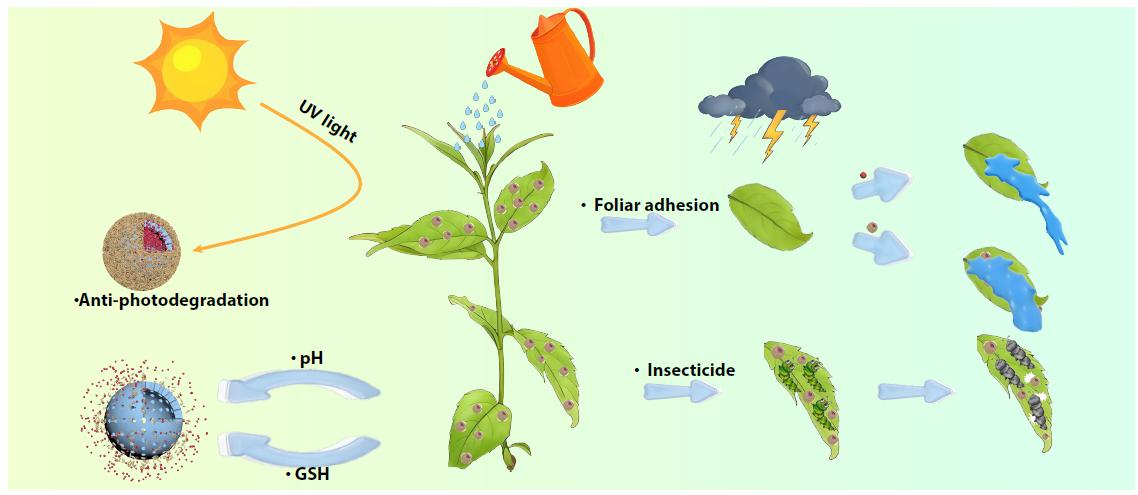
Smart pesticide delivery systems based on stimuli-responsive nanocarriers have attracted considerable attention because of their potential to enhance pesticide efficiency while reducing environmental risks. In this study, a novel pH/glutathione dual-responsive pesticide delivery system was constructed through the synthesis of disulfide-bridged hollow mesoporous organosilica nanospheres (HMONs) via the Stöber method, followed by poly(acrylic acid) (PAA) coating through distillation-precipitation polymerization to form HMONs@PAA nanocomposites. The resulting abamectin-loaded system (Abamectin-HMONs@PAA) demonstrated a 12.73% pesticide loading capacity and significantly improved photostability, retaining twice as much active ingredient as free abamectin after 250 h of UV irradiation (36 W). Release studies revealed pH- and glutathione-dependent characteristics, with cumulative releases in acidic conditions exceeding those in neutral and alkaline environments by 18.66% and 40.98%, respectively, and a 14.2% increase in glutathione-containing solution (0.2 mmol·L–1 in 70% ethanol) after 97 h. Bioassays showed superior performance against Plutella xylostella, with a 13.33% reduction in survival rate compared to conventional suspension at equivalent dosage (40 mg·L–1), while maintaining efficacy after extensive rainfall simulation (20 events over 10 days). This study provides a promising approach for developing environmentally responsive nanopesticides with enhanced durability and controlled-release properties, offering significant potential for sustainable crop protection.
Functionally graded cellular structures (FGCSs) have a multitude of applications to a wide range of industries. Utilising the ever-progressing technology of additive manufacturing (AM), FGCSs can be applied to control material grading and achieve the desired mechanical properties. The current study explores the design and optimisation of FGCSs for AM, with a focus on improving the compression and impact performance of below knee (BK) prosthetic limbs made of thermoplastic polyurethane (TPU). A multiscale research methodology integrating topology optimization (TO), finite element analysis (FEA), and design of experiments (DoE) was adopted to optimise lattice structures in terms of stiffness and lightweight properties. Two-unit cell designs were considered in the study: Schwarz P gyroid and body-centered cubic (BCC). Response surface methodology (RSM) was implemented to analyse the effect of minimum and maximum cell wall thickness, cell size, and unit cell type on the mechanical performance of TPU FGCS structures. The results indicated that a Schwarz P FGCS structure with cell size, minimum and maximum cell wall thickness of 6, 0.9 and 2.8 mm, respectively, could be optimal for a compromise between performance and weight. In this optimized case, stiffness and volume fraction values of 684 N/mm and 0.64 were obtained, respectively. The study also presents a proof-of-concept design for a BK prosthetic damper, highlighting the potential of FGCSs to enhance patient comfort, reduce manufacturing costs, and enable personalised designs through 3D scanning and AM. The obtained results could be a step forward towards the incorporation of AM technologies in prosthetics, offering a pathway to lightweight, cost-effective, and functionally tailored solutions.
Polyurethane elastomers exhibit high dielectric constants owing to their polar groups, and can be used as energy storage capacitors. Energy storage depends not only on the dielectric constant but also on the dielectric loss. However, the relationship between chain structure and dielectric properties is not yet clear. Ketal-containing crosslinked polyurethane elastomers were prepared using cyclic ketal diol as a chain extender. The effect of the soft segment length on the dielectric properties and energy storage was investigated. The cause of the change in the dipolar polarization with the soft segment length was analyzed. As the soft segment length increased, the hard-soft hydrogen bonding decreased, whereas the hard-hard hydrogen bonding increased. Under the action of an electric field, the polar bonds in the ketal-containing polyurethane elastomer overcome the hydrogen bonding between hard-soft segments to produce polarization; meanwhile, they also experience crankshaft motions to generate polarization. The former has a relatively high relaxation activation energy of approximately 10−20 kJ∙mol−1, resulting in a large dielectric loss. The latter has a relatively low relaxation activation energy, approximately 0.7−1.7 kJ∙mol−1, leading to low dielectric loss. As a result, the dielectric constant showed a decreasing trend, and the dielectric loss gradually decreased. This study provides a theoretical foundation for improving the dielectric properties of polyurethane elastomers.
Conducting hydrogels have garnered significant interest in the field of wearable electronics. However, simultaneously achieving high transparency, high conductivity, strong adhesion, and self-healing ability within a short time remains a major challenge. In this study, a multifunctional mussel-inspired hydrogel was synthesized in only 5 min, with polydopamine (PDA)-polypyrrole (Ppy)-polyaniline (PANi) and poly(vinyl alcohol) (PVA) nanoparticles incorporated into the polyacrylamide (PAM) network. The resulting hydrogel exhibited high transparency (about 90% light transmission in the range of 400–800 nm), high conductivity ((95.4±0.4)×10–4 S/cm), tensile strength (32.60±1.03 kPa), strain at break (904.46%±11.50%), and adhesive strength (30–60 kPa). It also demonstrated rapid self-healing properties (about 48% strength recovery within 1 h at 50 °C) and water-dependent shape memory behavior. As a wearable strain sensor, the hydrogel successfully detected finger flexion, wrist movements, facial expression changes, and breathing with high sensitivity and stability. The calculated gauge factor (GF) was 7.44±0.31, which is higher than that of many previously reported hydrogels. Compared with previous oyster-inspired or Ppy-based hydrogels, our system showed a much shorter synthesis time, higher transparency, and enhanced multifunctionality. These findings highlight the potential of the proposed hydrogel for next-generation flexible electronics, e-skin, and biomedical monitoring devices.
A simultaneous boost in toughness and fire safety of epoxy (EP) is achieved through solvent-free one-step neutralization of phytic acid with 1,8-diaminooctane to yield a multifunctional bio-based curing agent, PA-DAO. When used as the sole hardener, 5 wt% PA-DAO increased the tensile, flexural, and impact strengths by 165%, 81%, and 455%, respectively, over the parent amine system, whereas the tensile and flexural toughness increased by 1387% and 775%, respectively. At 25 wt% loading, the resin attained a UL-94 V-0 rating and a limiting oxygen index of 28.1%, accompanied by a 71% reduction in the peak heat-release rate and a 53% suppression of total smoke production. This facile, green protocol provides scalable access to ultra-tough, intrinsically flame-retardant epoxy networks without external plasticizers or additives.
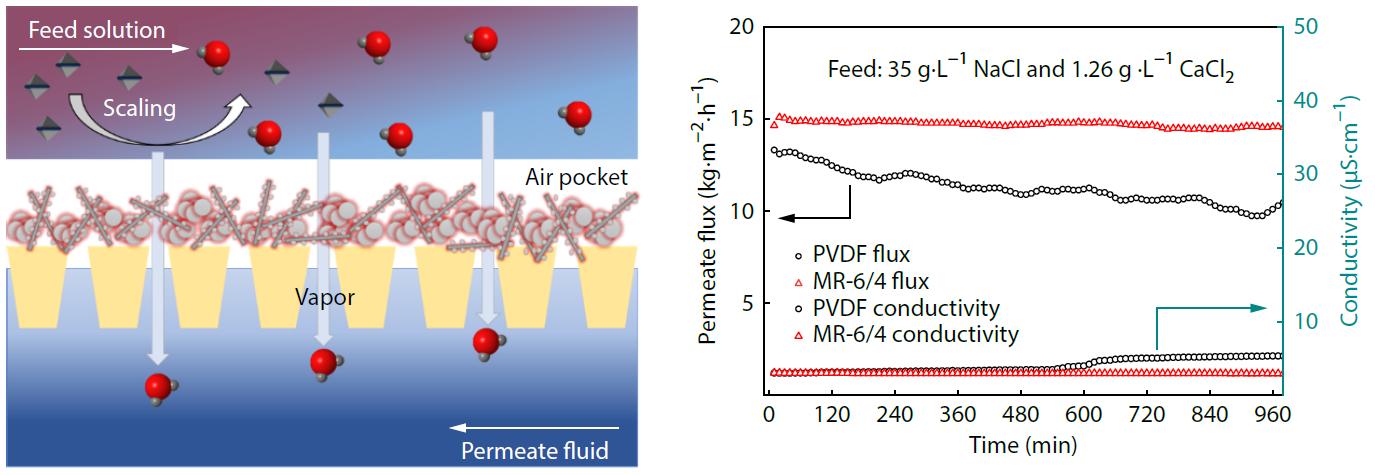
Membrane distillation (MD) is an advanced membrane separation process that employs hydrophobic microporous membranes to separate non-volatile solutes from the feed solution, driven by vapor pressure gradients generated through thermal difference. This technology offers strong desalination capabilities and efficiently harnesses low-grade thermal energy sources, including geothermal and waste heat, making it a cost-effective solution for freshwater scarcity. Nevertheless, hydrophobic membranes are prone to contamination by surfactants, inorganic salts, and other substances in feed solutions. To address this, low-surface-energy composite nano-inorganic materials composed of carbon nanotubes and silica were modified and synthesized via organosilicon chemistry. A superhydrophobic surface exhibiting a water contact angle of 157.96o was successfully fabricated using above nano-materials on poly(vinylidene fluoride) (PVDF) membrane surface with micro-nano structures via a one-step spray-coating method. Compared to unmodified PVDF membrane, the superhydrophobic membrane demonstrated superior resistance to common scaling agents such as CaCl2, Mg(OH)2, CaCO3, and CaSO4, while maintaining stable permeate flux (13.4 kg·m–2·h–1) during MD tests. Additionally, the modified membrane exhibited enhanced wetting resistance when treating feed solutions containing sodium dodecyl sulfate (SDS), significantly extending the operational lifespan of the membrane. Due to its outstanding performance, this superhydrophobic membrane is expected to promote the practical application of MD technology in the treatment of complex wastewater and efficient seawater desalination.
Recycling of waste rubber (WR) is crucial for the sustainable development of the rubber industry. The enhancement of interfacial interactions is the main strategy for waste polymer recycling. However, there is a lack of methods for enhancing the interfacial interactions for WR recycling because WR contains abundant inert C―H bonds. Herein, we designed thioctic acid inverse vulcanization copolymers to endow recycled WR with dynamic disulfide interfacial interactions, significantly improving the mechanical properties of recycled WR. These disulfide interfacial interactions among the recycled WR tend to exchange, which dramatically increases the fractocohesive length and prevents stress concentration near the crack tips. When recycled WR is subjected to external stress, the loads are redistributed across a broad region of adjacent regions instead of being concentrated on a limited length scale, which resists crack propagation. This work effectively recycled WR, providing a strategy for solvent-free reaction-derived inverse vulcanization copolymers to improve the toughness of WR recycling.
Vitrimers belong to a class of polymeric materials capable of bond exchange reactions, showing great promise for environmental protection and sustainable development. However, studies on the coupling mechanism between the bond exchange kinetics and segmental dynamics near the glass transition temperature (Tg) remain scarce. Herein, we employed molecular dynamics simulations to investigate the dynamic heterogeneity of the segment motion and bond exchange in vitrimers. The simulation results revealed that the bond exchange energy barrier exerts a much stronger influence on the bond exchange kinetics than on the segmental dynamics. At lower temperatures, slower segmental relaxation further constraind the bond exchange rate. Additionally, increasing the bond exchange energy barrier markedly enhanced the dynamic heterogeneity of segment motion. A close correlation was observed between heterogeneity and bond exchange. This study elucidated the coupling mechanism between bond exchange and segmental dynamics at the molecular scale, thereby providing a theoretical basis for designing vitrimer materials with tunable dynamic properties.
The complex interactions and conflicting performance demands in multi-component composites pose significant challenges for achieving balanced multi-property optimization through conventional trial-and-error approaches. Machine learning (ML) offers a promising solution, markedly improving materials discovery efficiency. However, the high dimensionality of feature spaces in such systems has long impeded effective ML-driven feature representation and inverse design. To overcome this, we present an Intelligent Screening System (ISS) framework to accelerate the discovery of optimal formulations balancing four key properties in 15-component PTFE-based copper-clad laminate composites (PTFE-CCLCs). ISS adopts modular descriptors based on the physical information of component volume fractions, thereby simplifying the feature representation. By leveraging the inverse prediction capability of ML models and constructing a performance-driven virtual candidate database, ISS significantly reduced the computational complexity associated with high-dimensional spaces. Experimental validation confirmed that ISS-optimized formulations exhibited superior synergy, notably resolving the trade-off between thermal conductivity and peel strength, and outperform many commercial counterparts. Despite limited data and inherent process variability, ISS achieved an average prediction accuracy of 76.5%, with thermal conductivity predictions exceeding 90%, demonstrating robust reliability. This work provides an innovative, efficient strategy for multifunctional optimization and accelerated discovery in ultra-complex composite systems, highlighting the integration of ML and advanced materials design.
Shear stress overshoot in entangled polymer rheology is a hallmark of transient dynamics, but its microscopic origin remains under debate. Using molecular dynamics simulations, we investigate a two-step shear protocol consisting of successive startup shears separated by a waiting period, with the first shear interrupted before the overshoot. In the homogeneous flow, the GLaMM theory captures the stress response during the first shear, but fails to reproduce the nonmonotonic dependence of the second stress overshoot (σ2max) on the waiting time. Contrary to the prediction of a nonmonotonic normal stress component σyy during the waiting period, our simulations show that σyy, like the tube segment orientation (Sxy), the contour length of the primitive chain (L), and the entanglement number per chain (Z), relaxes monotonically toward equilibrium. At the strain corresponding to σ2max, both the tube segment orientation and the entanglement number per chain exhibit a nonmonotonic dependence on the waiting time that closely mirrors the behavior of σ2max, indicating that both factors play significant roles in governing σ2max. Our findings are consistent with the interpretation of Ianniruberto and Marrucci [ACS Macro. Lett. 2014, 3, 552] for orientation effects and with the viewpoint of Wang et al. [Macromolecules 2013, 46, 3147] for entanglement effects, although the two explanations are rooted in distinct physical pictures. These results provide new insights into the stress responses of entanglement polymer fluids and underscore the need for a more unified theoretical framework.
This study integrates experimental investigation with molecular dynamics simulations to elucidate the hydrogen transport mechanisms in polyetheretherketone (PEEK) and polytetrafluoroethylene (PTFE), offering fundamental insights into the barrier properties of high-performance polymeric materials. Experimental results demonstrate that PEEK exhibits superior hydrogen barrier performance compared to PTFE at both ambient and elevated temperatures. However, detailed molecular dynamics simulations uncover a distinctive, enthalpy-driven "high solubility-low diffusivity" transport mechanism: although PEEK displays higher hydrogen solubility due to its stronger thermodynamic affinity, its diffusion coefficient is markedly lower than that of PTFE. This mechanism remains operative across a broad operational temperature range (233 K to 358 K), yet its influence on overall permeability is strongly temperature-dependent. At room and high temperatures, the exceptionally low diffusivity of PEEK governs the entire permeation process, establishing its effectiveness as a high-performance hydrogen barrier material. In contrast, under low-temperature conditions (e.g., 233 K), the general suppression of diffusion allows the high solubility of PEEK to dominate, resulting in greater overall permeability than PTFE and giving rise to a performance “reversal” phenomenon. This distinct transport behavior originates from the strong non-covalent interactions between hydrogen molecules and the aromatic rings as well as polar functional groups present in the amorphous regions of PEEK, which simultaneously enhance solubility and impose significant kinetic energy barriers. The "structure-mechanism" correlation framework established in this work provides a robust theoretical foundation for the rational design of next-generation hydrogen barrier materials tailored to specific operational temperature requirements.
Ultra-high molecular weight polyethylene (UHMWPE) is a key material for marine applications owing to its outstanding self-lubrication and corrosion resistance. However, its long-term performance is compromised by plastic deformation in seawater. In this study, we performed a comparative analysis of the UHMWPE dynamics under seawater and water conditions to investigate the plastic deformation of UHMWPE induced by seawater. The results show that the plastic deformation of UHMWPE is amplified in seawater relative to the water conditions. Under thin fluid conditions, frictional interfaces exhibit a higher interfacial friction force and interaction energy in seawater than in water. Compared to freely diffused water molecules, hydrated ions occupy larger interchain spaces within polyethylene. Furthermore, the diffusion of hydrated ions weakens the interchain interactions, promoting more severe polyethylene chain rearrangement and accelerating seawater-induced plastic deformation in UHMWPE during friction. Furthermore, the diffused seawater accelerated the disentangling of the polyethylene chains and enhanced the orderly orientation distribution of polyethylene. Compared to free water molecules, the water molecules of hydrated ions exhibit enhanced attraction to free-flowing water molecules, thereby accelerating seawater flow across submerged UHMWPE surfaces. This flow enhancement promotes surface polyethylene chain mobility in seawater.