All-polymer solar cells (all-PSCs) have significantly improved long-term stability and mechanical stretchability. The power conversion efficiency (PCE) of all-PSCs has been rapidly improved from ~1% to now over ~17%, driven by rational molecular design, blend morphology optimization, and device engineering. However, most all-PSCs are generally processed with halogenated solvents, hazardous for human health and the global environment. Achieving high-performance all-PSCs with halogen-free solvent processing remains a challenge. This feature article presents recent advances in green-solvent-processable all-PSCs from the material design and morphological control perspective, and further reviews progress in using more environmentally friendly solvents (i.e., water or alcohol) to achieve genuinely sustainable and environmentally friendly manufacturing all-PSCs. Finally, we provide an outlook on the challenges and opportunities for large-scale manufacturing of green-solvent-processable all-PSCs.
Insulating polymers (commodity plastics in particular) are a major category of polymeric materials widely used in our daily life, but they exhibit abysmal electrical conductivity. Instead, conjugated polymers are gaining tremendous interest due to their excellent electrical properties and versatile applications in organic electronics. In this perspective, we provide a concise account of the added value in organic solar cells, as brought by the combined use of conjugated and insulating polymers. The challenging tasks and prospective directions are given to the potential benefits of employing insulating polymer additives, which spans from common commodity plastics to high-temperature resistant resins and thermoplastic elastomers. Particularly, the inert polymers can improve many important properties such as mechanical and thermal robustness but not sacrifice optoelectronic performance.
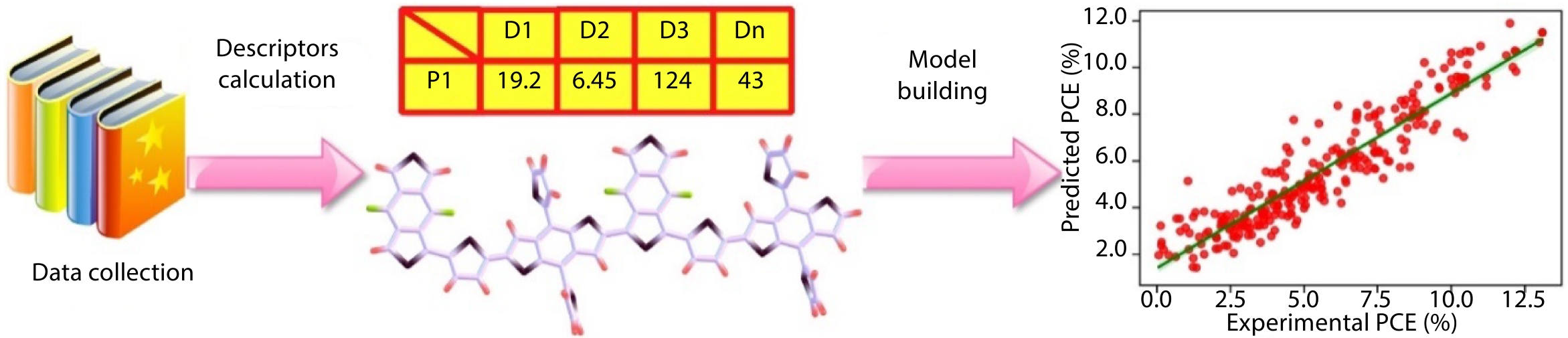
Machine learning is a powerful tool that can provide a way to revolutionize the material science. Its use for the designing and screening of materials for polymer solar cells is also increasing. Search of efficient polymeric materials for solar cells is really difficult task. Researchers have synthesized and fabricated so many materials. Sorting the results and get feedback for further research requires an innovative approach. In this minireview, we provides brief introduction of machine learning. The importance of machine learning is also mentioned, and the application of machine learning for polymeric material design is discussed. The key challenges that are hindering the wide spread use of machine are discussed. Suggestions are also given to improve the use of data science. The predictions using machine learning maybe not highly accurate but it definitely better than no prediction at all.
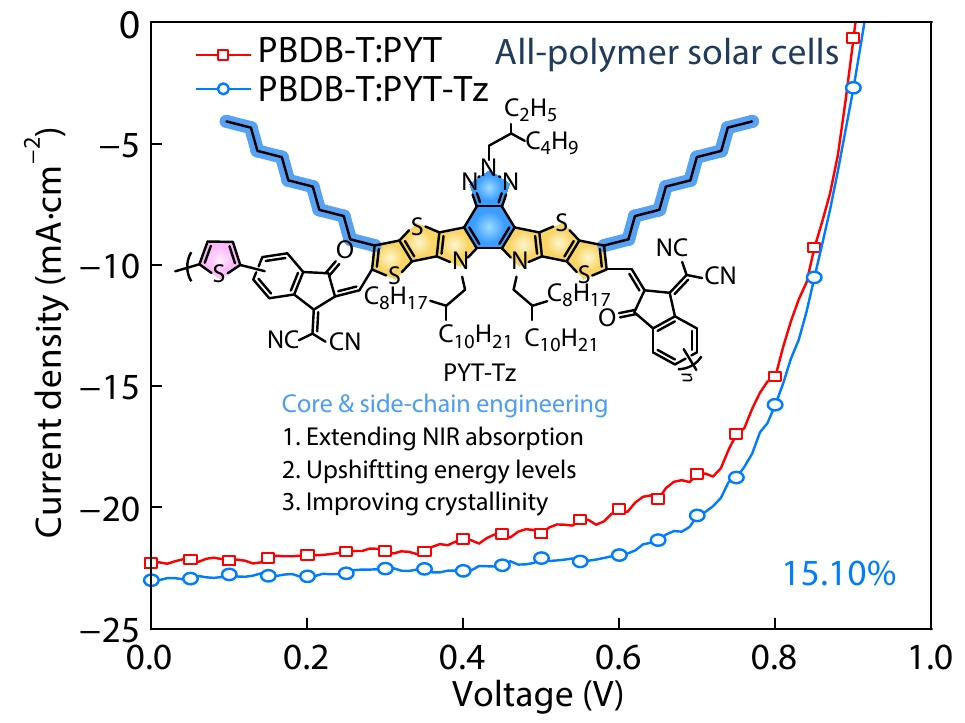
Finding effective molecular design strategies to enable efficient charge generation, high charge transport, and small energy loss is a longstanding challenge for developing high-performance all-polymer solar cells (all-PSCs). Here, we designed and synthesized a fused-aromatic-ring-constructed near-infrared (NIR) polymer acceptor (PA) PYT-Tz with fused-ring benzotriazole (BTz)-based A’-DAD-A’ structure as electron-deficient-core, n-nonane as alkyl-side-chain and thiophene as π-bridge, and achieved a power conversion efficiency (PCE) of 15.10% for the all-PSCs with PYT-Tz as acceptor and a wide-bandgap PBDB-T as donor. A control PA PYT reported by our lab recently was introduced for investigating the synergistic effect of the electron-deficient-core and alkyl-side-chain on the optoelectronic properties and photovoltaic performance of the n-type PAs. Compared with PYT, the designed PYT-Tz exhibits intense and red-shifted absorption, upshifted energy levels, high electron mobility and ordered molecular packing in the active layers, and, blended with PBDB-T, yields the efficient hole injection, ultrafast charge generation, and the decreased non-radiative recombination loss of 0.17 eV. Of note is that the PCE of 15.10% is one of the highest PCE values for an all-PSC reported to date. Our results indicate BTz-based fused-aromatic-ring-constructed PAs are promising NIR acceptors in the all-PSCs.
Selection of the strategically substituted alkyl chains has a significant effect to modulate the physical properties of conjugated polymers, electro-optical characteristics, and active layer morphology of the corresponding polymer solar cells (PSCs). Herein, we systematically synthesized three dibenzo[a,c]phenazine based D-π-A donor polymers named PBP-C0, PBP-C8, and PBP-C6 with different alkyl substitutions on thiophene π-bridges, without alkyl, 2-ethylhexyl and n-hexyl groups, respectively. The absence of the alkyl chain (PBP-C0) on the π-bridge caused poor solubility and unfavorable miscibility with the Y5 acceptor, leading to the lower photovoltaic performance. The bulky alkyl chain of 2-ethylhexyl on the π-bridge group caused the twisting of PBP-C8 conjugated backbone, which limits the charge transport and also compromises the photovoltaic performance. In contrast, the PBP-C6-with flexible linear alkyl chains has almost planar curvature geometry resulting in the small uniform domain size and appropriate phase separation in the blend film morphology. These favorable properties enhanced the exciton generation to dissociation, charge carrier mobility, and also lowered the charge recombination. Among three polymers, PBP-C6-based devices exhibit the best PCE of 11.60%. From these results, thiophene π-bridge alkyl substitution demonstrated an important strategy to adjust energy level, absorption, and phase separation morphology to enhance the photovoltaic performance of the PSCs.
In this work, the “functionalization-polymerization” (FP) method has been used to construct fullerene-contained double-cable conjugated polymers with “donor-acceptor” backbones. It was realized via synthesizing a fullerene-contained monomer and performing Stille polymerization. With this method, a series of double-cable conjugated polymers with different fullerene contents were developed and applied into single-component organic solar cells. The power conversion efficiencies (PCEs) based on these polymers increased from 0.71% to 1.71% with the enhanced fullerene contents. The relatively low PCEs might be originated from the poor microstructure in these polymers. These new conjugated polymers with molecular heterojunction would show potential application in organic electronic devices.
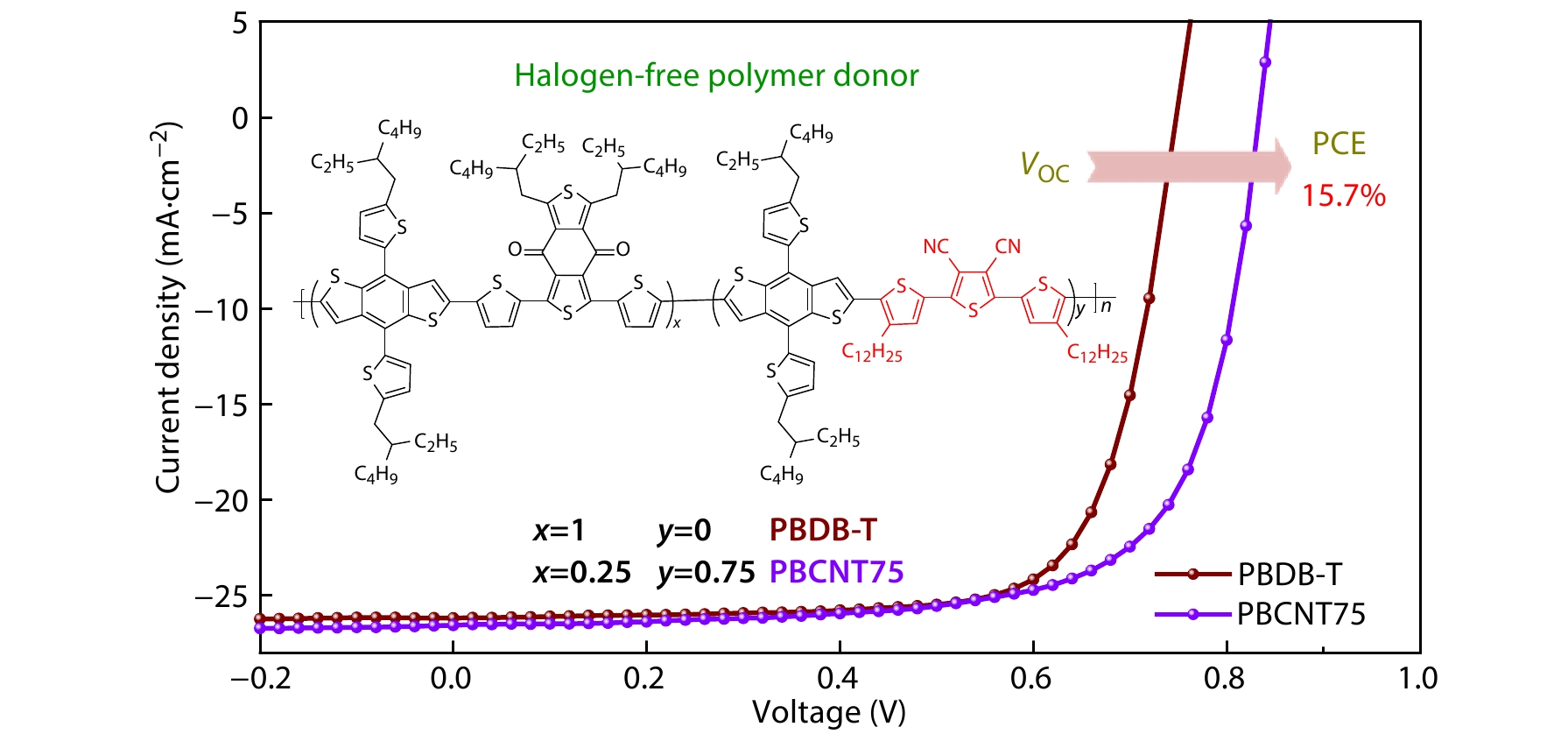
Polymer solar cells (PSCs) consisting of a polymer donor and a small molecular acceptor is a promising photovoltaic technology, whose device performance is determined by both polymer donor and small molecular acceptor. Halogen atoms such as fluorine or chlorine atoms were usually introduced onto the polymer donors to downshift the highest occupied molecular orbital (HOMO) energy levels and improve the open-circuit voltage (VOC) of the PSCs. However, the introduction of the halogen atoms especially fluorine atoms greatly complicates the polymer synthesis. Herein, we report the use of a structural simple and easily synthesized building block, 3,4-dicyanothiophene (DCT), to construct a set of halogen-free polymer donors PBCNTx (x=25, 50, 75) via ternary random copolymerization. The introduction of DCT units not only simplified the synthesis, but also downshifted the HOMO energy levels of the polymers and improved the VOC of PSCs effectively. Encouragingly, the PBCNT75 afforded a power conversion efficiency up to 15.7% with a VOC of 0.83 V, which are among the top values for halogen-free polymer donors. This work shows that the introduction of DCT units is a simple yet effective strategy to construct halogen-free and low-cost polymer donors for high-performance PSCs.
We synthesize and compare four near-infrared absorbing fused-ring electron acceptors named as nTTIC (n=2, 3, 4, and 5), based on different number of thieno[3,2-b]thiophene (TT) unit as the electron-donating core. With increasing the TT unit, absorption spectrum of the TTIC series red shifts, and the highest occupied molecular orbital (HOMO) upshifts notably. It is worth noting that 4TTIC and 5TTIC exhibit absorption edges approaching 1100 nm, which is the photoresponse limit of solar cells based on crystal silicon. When the TTIC series acceptors are blended with polymer donor PM6, the binary-blend organic solar cells based on 3TTIC show the best power conversion efficiency (PCE) of 13.1%. In contrast, 2TTIC-based devices exhibit relatively lower PCE of 8.32%, mainly caused by the larger energy loss and blue-shifted absorption. Due to insufficient driving force of charge separation caused by very high HOMO, 4TTIC and 5TTIC show poor PCEs lower than 3%.
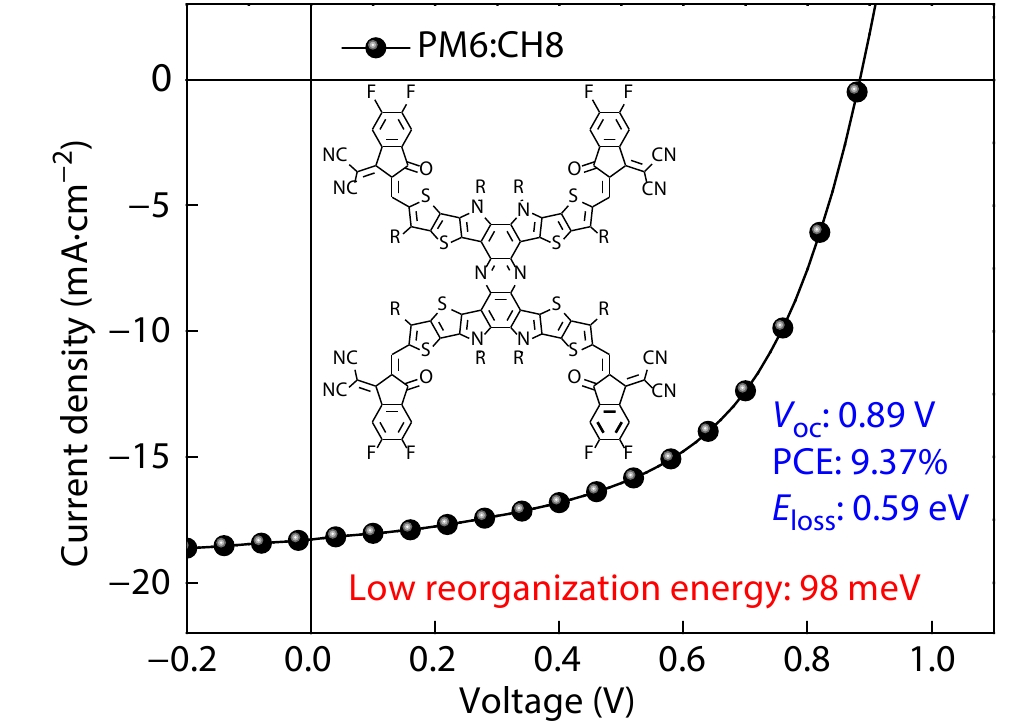
A novel two-dimensional A-D-A acceptor named as CH8 with four electron-withdrawing end units has been successfully designed and synthesized. The enlarged conjugation in two directions renders CH8 exhibit an extremely low electron reorganization energy of 98 meV, which makes CH8 a potential candidate for outstanding organic semiconductor material. When blended with PM6, a considerate power conversion efficiency of 9.37% along with a high open-circuit voltage (Voc) 0.889 V and low energy loss (Eloss) below 0.6 eV is achieved. These results indicate that the two-dimensional A-D-A molecule with four electron-withdrawing end units is an effective molecular design strategy to achieve lower voltage loss and also possible high performance for organic photovoltaics if ideal morphology could be achieved.
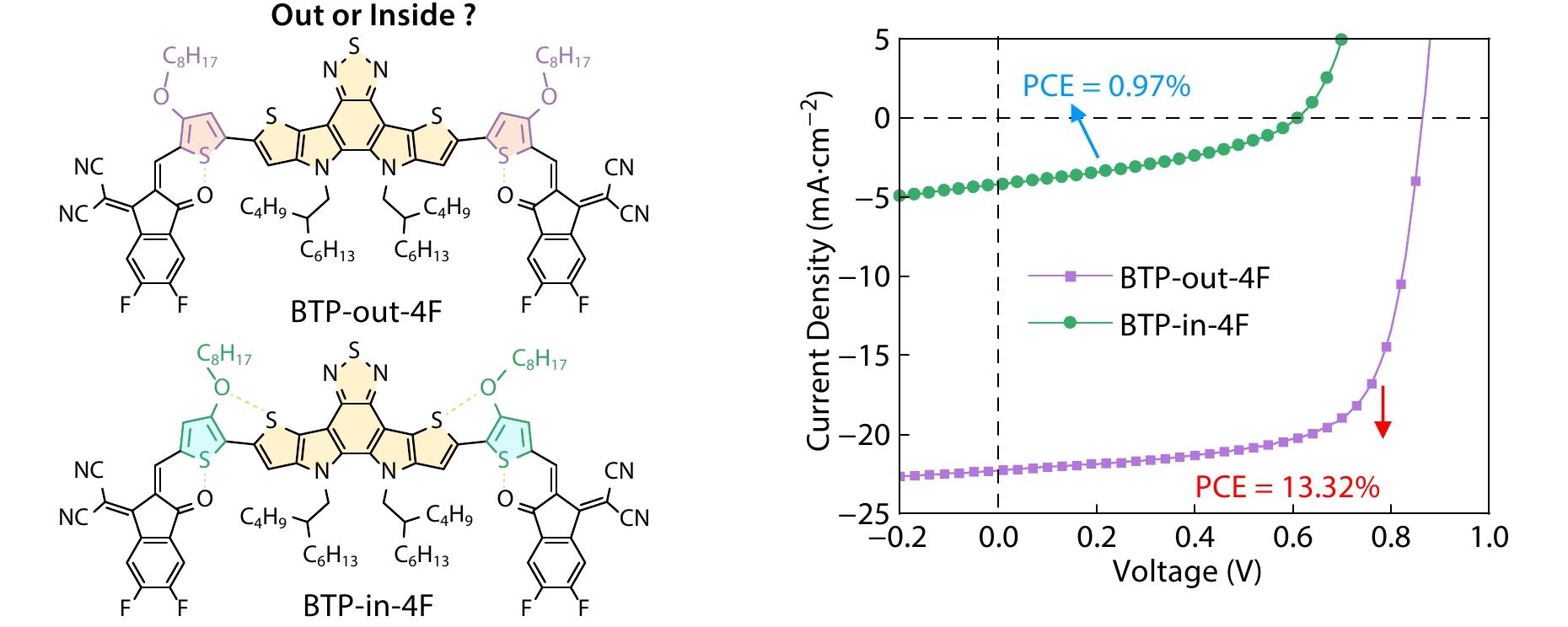
Two lowly fused non-fullerene acceptors (NFAs) with isomeric structures, named as BTP-out-4F and BTP-in-4F, were developed by tailoring the fused 7-ring central core of Y6 into a lowly fused 5-ring linked with two octyloxythiophene bridges. BTP-out-4F with octyloxy side chains away from the central core exhibited large steric hindrance that restrained the rotational freedom between the thiophene bridge and end group but maintained free rotation between the central core and the thiophene bridge. In contrast, BTP-in-4F with octyloxy side chains close to the central core had much lower rotation freedom due to the non-covalent S···O interactions locked the central core, thiophene bridge and end group simultaneously, making BTP-in-4F have higher molecular crystallinity. On the other hand, the optical properties, energy levels and the blend morphology properties were significantly influenced, leading to distinctive photovoltaic performances. BTP-out-4F formed favorable energy level alignment and morphology when matching with PBDB-T donor, thus its device realized a much higher PCE of 13.32%, which was over 13 times than that of BTP-in-4F based device (PCE=0.97%).
The metal oxides with low trap density of states as the electron transport layer are crucial for the high performance of the organic solar cells (OSCs). It is universally acknowledged that modifying n-type metal oxide contacts with polymer donors will harm the carrier extraction on account of the mismatched energy level. However, we find that modifying interlayer consisting of the alcohol amines with some polymer donor additive can unusually enhance the performance of the OSCs. Compared with triethanolamine (TEA) passivated ZnO, TEA:polymer donor treated ZnO shows lower trap density and enhances electron mobility resulting in higher current density in OSC devices. Here, we reveal that the enhanced oxygen-defect passivation ability of TEA with polymer additive is attributed to the enhanced negative electrostatic potential of TEA owing to the hydrogen bond formation between the polymer and the hydroxyl group in TEA. This strategy that enhancing the negative electrostatic potential of the passivators for improving oxygen defect passivation can be extended to other types of organic electronic devices.
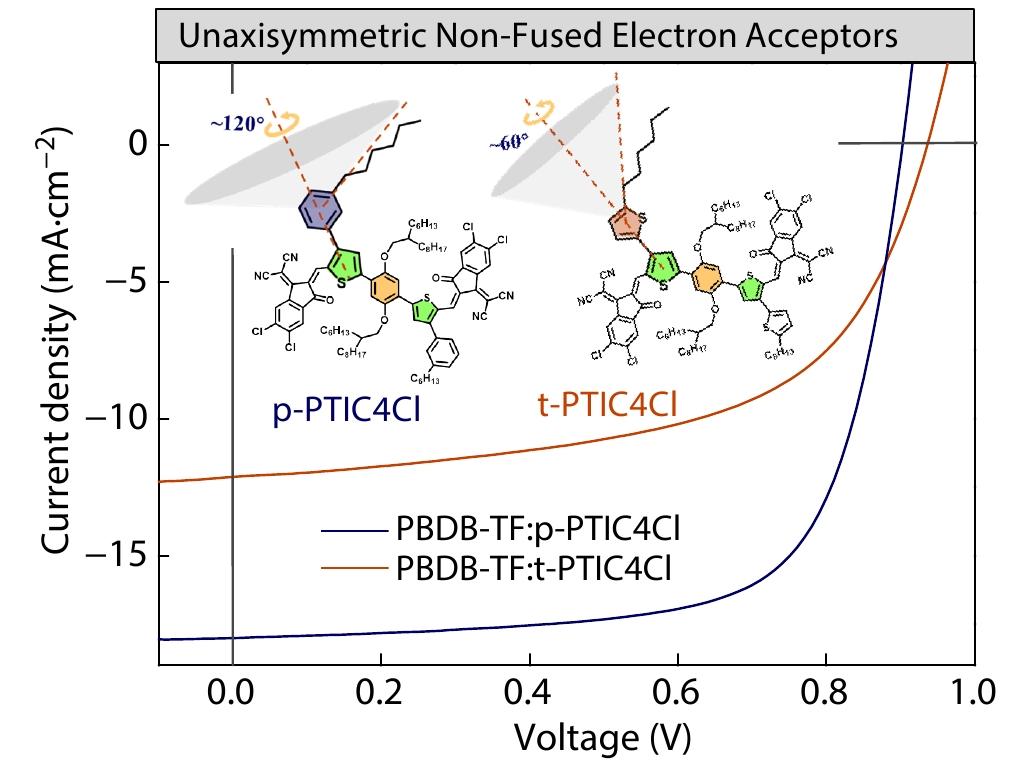
To develop photovoltaics embracing the both features of high performance and low cost has drawn attentions of researchers, yet representing the significant challenges. In this work, two non-fused ring acceptors (NFRAs), namely p-PTIC4Cl and t-PTIC4Cl, were developed via a short synthetic route. By tethering unaxisymmetric aromatic chains to thienyl bridge of NFRAs, we revealed that the tuning of aromatic chains allows modulating the self-assembly and stacking of NFRAs in solid, hence influencing their optoelectronic and photovoltaic properties. As results, p-PTIC4Cl, consisting of 3-hexylbenzene with large axial angle to backbone, can achieve superior PCE of 11.30% than that of t-PTIC4Cl with 2-hexylthiophene chains (PCE of 6.49%), when pairing with polymer donor PBDB-TF. Despite of the only subtle structural difference, the p-PTIC4Cl based blend films possess better exciton dissociation and charge transfer rates, as well as photostability, to those of t-PTIC4Cl based blends.
The aligned molecular packing structure is vital to the anisotropic charge transport in conjugated polymer and small molecule thin films. However, how this molecular packing motif influences the photoelectric conversion process at the donor/acceptor heterojunction is still mysterious. Herein, we employed a PM6/Y6 bilayer model to investigate the long-range alignment of molecular packing induced photoelectric conversion process. Both PM6 and Y6 layers were properly controlled to exhibit the uniaxially oriented molecular packing compared to their as-cast counterparts, as revealed by the polarized absorption spectra and transmission electron microscopy. After analyzing the photovoltaic performance of bilayer devices, the smaller energy loss, lower energetic disorder, and longer charge carrier lifetime can be observed in the bilayer devices with aligned Y6 molecules, which contribute to a higher power conversion efficiency (PCE) than the as-cast devices. While the molecular packing structure of PM6 layer exhibited negligible influence on the device performance, probably resulting from the intrinsic semicrystalline nature of PM6 molecules. Our results indicate that the alignment of small molecular acceptor at the donor/acceptor interfaces should be a powerful strategy to facilitate the photoelectric conversion process, which will definitely pave the way to highly efficient bulk heterojunction photovoltaic device.
Polymerizing the narrow bandgap small-molecule architecture with a conjugated linking unit (or called the polymerized small molecule acceptors (PSMAs)) is a promising strategy to design polymer acceptors for efficient all polymer solar cells (all-PSCs). Currently, the fused-ring-based small molecule acceptors (SMAs) are preferred monomers to design efficient PSMAs, leaving the challenge of reducing the materials cost. In this work, we firstly employ nonfused-core SMA with simple synthetic procedures to design PSMAs (namely PBTI-H, PBTI-F and PBTI-Cl) to address this issue. Relative to the fused-ring based counterparts, these three PSMAs exhibit much higher figure-of-merit value. Additionally, a power-conversion efficiency of 8.80% is achieved in the PBTI-Cl-based all-PSC. The results offer an attractive approach to design low-cost PSMAs for efficient all-PSCs.
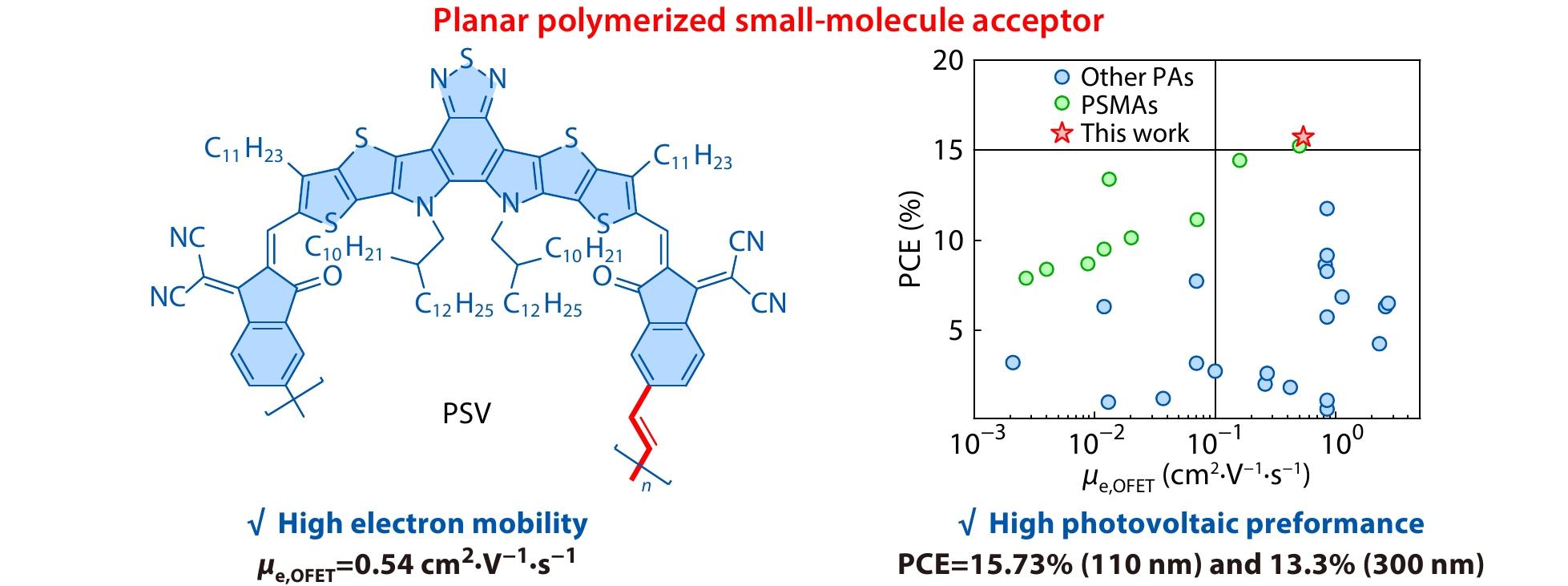
Significant progress has been achieved for all-polymer solar cells (APSCs) in the last few years by the use of polymerized small molecular acceptors (PSMAs). Developing high electron mobility polymer acceptors has been considered a feasible solution to further improve the photovoltaic performance of APSCs and fabricate thick film devices, which contributed to roll-to-roll printing techniques. In this work, we designed and synthesized PSV, an A-DA’D-A small molecule acceptor-based PSMA with the vinyl group as a bridged linkage to reduce the steric hindrance between the 1,1-dicyanomethylene-3-indanone (IC) terminal group. In comparison with the C―C bond linked polymer acceptor PS, PSV exhibits an almost planar conjugated framework and well-ordered molecular stacking in the thin film. Moreover, PSV exhibits superior n-type semiconducting properties with high electron mobility of up to 0.54 cm2·V−1·s−1, which is the highest value among reported PSMAs. By utilizing PM6 as a polymer donor, PSV-based blend forms a favorable nanomorphology and exhibits high and well-balanced hole/electron mobilities, which is beneficial for exciton separation and charge transport. Consequently, APSCs based on PM6:PSV achieved high power conversion efficiencies of up to 15.73%, with a simultaneously realized high Voc of 0.923 V, Jsc of 23.2 mA·cm−2, and FF of 0.734. Such superior features enable PSV with excellent thickness-insensitive properties and over 13% PCE was obtained at 300 nm. To the best of our knowledge, the high PCE of 15.73% with excellent electron mobility of 0.54 cm2·V−1·s−1 is the highest values reported for APSCs. These results point to the great significance of developing polymer acceptors with a high electron mobility for boosting the performance of APSCs.
The application of organic photovoltaic (OPV) cells to drive off-grid microelectronic devices under indoor light has attracted broad attention. As organic semiconductors intrinsically have less ordered intermolecular packing than inorganic materials, the relatively larger energetic disorder is one of the main results that limit the photovoltaic efficiency of the OPV cells at low carrier density. Here, we optimize the alkyl chains of non-fullerene acceptors to get suppressed energetic disorder. We find the optimal acceptor DTz-R1 with the shortest alkyl chain has the strongest crystalline property and lowest energetic disorder. As a result, over 26% efficiency is recorded for the 1 cm2 OPV cells under a light-emitting diode illumination of 500 lux. We also fabricate a 100 cm2 cell device and get a PCE of 23.0%, which is an outstanding value for large-area OPV cells. These results suggest that modulation of the energetic disorder is of great importance for further improving the efficiency of OPV cells, especially for indoor applications.
The development of new polymer acceptors strongly paves the power conversion efficiency (PCE) improvement of all polymer solar cells (all-PSCs). Herein, we develop a new polymer acceptor PBN26, which is the alternating copolymer of 2,2'-((2Z,2'Z)-((12,13-bis(2-octyldodecyl)-3,9-diundecyl-12,13-dihydro-[1,2,5]thiadiazolo[3,4-e]thieno[2'',3'':4',5']thieno[2',3':4,5]pyrrolo[3,2-g]thieno[2',3':4,5]thieno[3,2-b]indole-2,10-diyl)bis(methanylylidene))bis(3-oxo-2,3-dihydro-1H-indene-2,1-diylidene))dimalononitrile and B←N bridged thienylthiazole (BNTT). The optimized all-PSCs device based on PBN26 exhibits a PCE of 15.09%, which is the highest value of the all-PSCs based on B←N-based polymer acceptors at present. Moreover, we also fabricate an all-PSC module with active area of 10 cm2 by blade coating, which exhibits a PCE of 8.78%. These results prove that polymer acceptors containing B←N units are promising for all-PSC device applications.
In this work, regio-regular and random polymers (reg-PTF and ran-PTF) comprising benzodithiophene and 3-fluorothiophene units are developed to investigate the influence of polymer chain regularity on the photovoltaic performance. Interestingly, reg-PTF exhibits higher HOMO energy level (~0.2 eV) than that of ran-PTF due to the more ordered molecular structure and higher crystallization. As the result, the HOMO energy level offset between donor and acceptor can be well controlled by selecting different acceptors. Using BTP-ec9-4F with a much deep HOMO energy level as acceptor, reg-PTF-based devices display an inferior PCE of 7.66% compared with ran-PTF based ones (11.78%) due to the too large HOMO energy levels offset. When blending with Y18-1F, the PCE of reg-PTF-based devices is increased to 13.23% due to the appropriate energy level. In comparison, the ran-PTF-based devices nearly do not work because of the negative HOMO energy levels offset. This work indicates that both the polymer chain regularity and the energy level offset between the donor and acceptor material are important to the performance of organic solar cells.