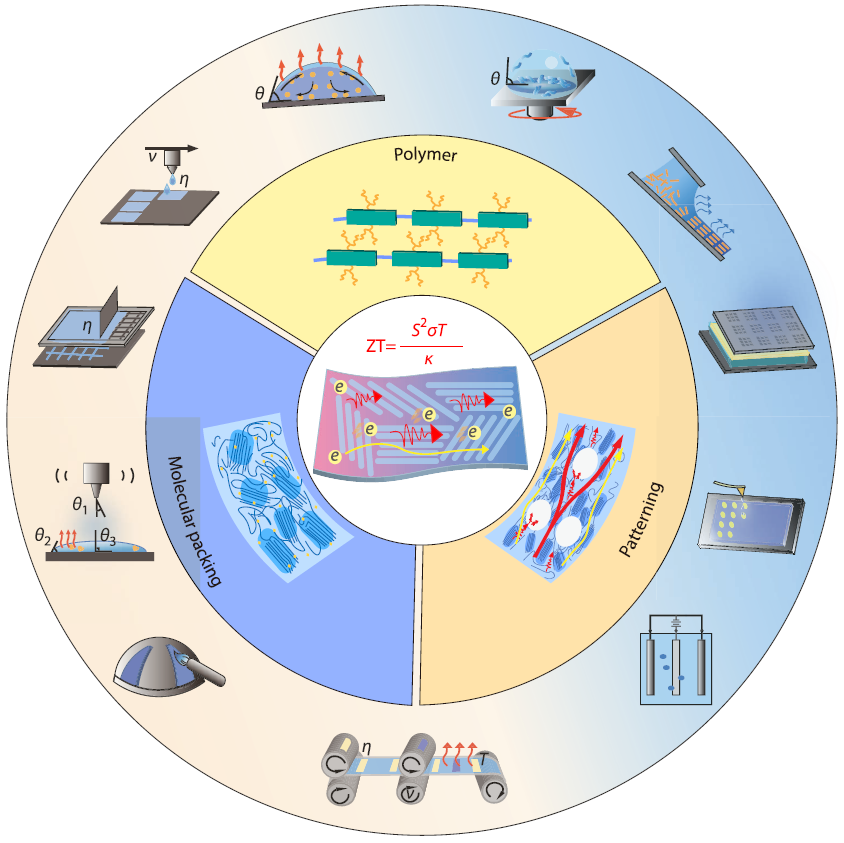
Thermoelectric (TE) materials, which are capable of direct conversion between heat and electricity, offer a promising solution for sustainable energy harvesting. Conjugated polymers have emerged as compelling candidates for flexible TE devices owing to their intrinsic flexibility, low cost, and low thermal conductivity. The performance of polymer-based organic thermoelectrics (OTEs) is profoundly influenced by the processing methods, which dictate molecular packing, crystallinity, and film morphology. This review systematically summarizes recent advances in polymer processing techniques for TE applications, including solution processing, patterning techniques, and large-area fabrication. We discuss the interrelationships among processing techniques, polymer microstructure, and TE performance, concluding with the current challenges and future perspectives for industrializing high-performance OTE devices.
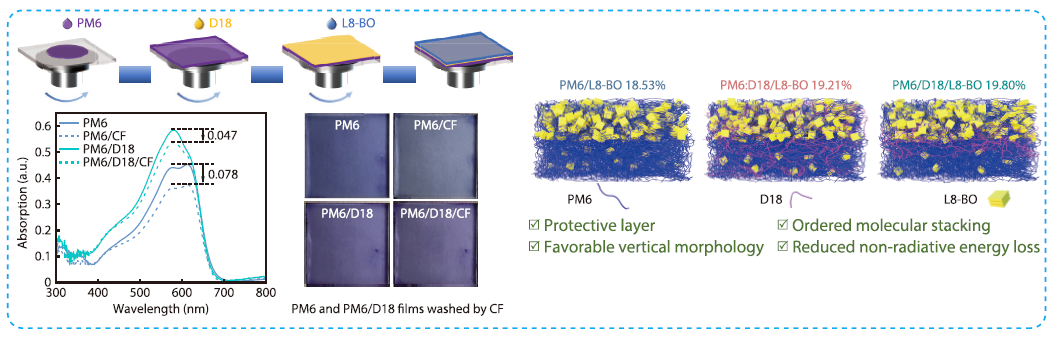
The pseudo-planar heterojunction (PPHJ) structure obtained via layer-by-layer (LBL) deposition offers a promising pathway for efficient and stable organic solar cells (OSCs); however, solvent-induced swelling and erosion of the donor layer during acceptor deposition often hinder the formation of an ideal vertical phase separation (VPS) morphology. Here, a simple approach for incorporating a highly crystalline polymer as a buffer layer between the donor and acceptor layers is proposed. We investigated the effectiveness of this strategy by constructing three systems: PM6/L8-BO, PM6:D18/L8-BO, and PM6/D18/L8-BO. Compared with the other two systems, when deposited as a separate layer, D18 with low surface energy forms a dense crystalline fibrillar network, effectively suppressing L8-BO over-penetration and mitigating chloroform-induced PM6 erosion. This architecture achieves the most favorable VPS morphology with an improved donor/acceptor gradient distribution and higher phase purity, facilitating charge transport and suppressing recombination. Moreover, the D18 buffer layer can regulate molecular packing, improve active layer crystallinity, and passivate interfacial defects to reduce energy loss. Consequently, the PM6/D18/L8-BO-based device achieved a superior power conversion efficiency (PCE) of 19.80%. Notably, integrating BTP-eC9 further increased the PCE to 20.21%. This study demonstrates that introducing a highly crystalline polymer as a p-i-n buffer layer can effectively optimize the VPS morphology, enabling high-performance PPHJ OSCs.
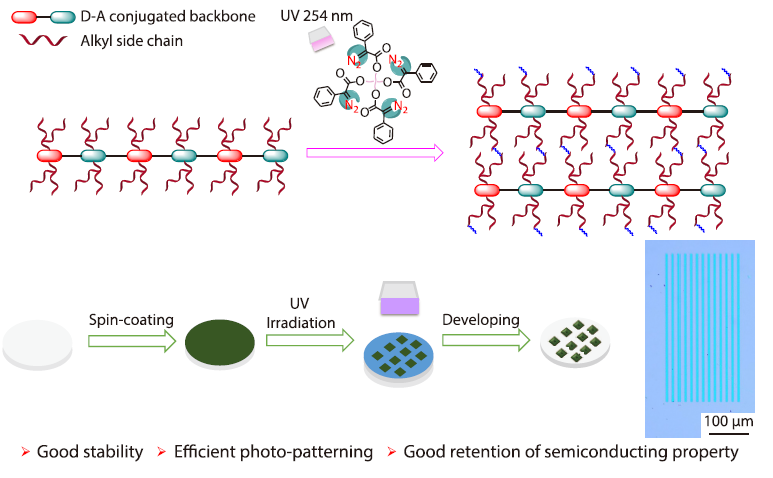
Efficient photo-patterning of polymer semiconductors with cross-linkers has emerged as a promising route to fabricate organic integrated circuits via all-solution processing techniques. Herein, we report a new four-armed diazo-based oligomer photo-crosslinker 2DPP4N2 for the patterning of semiconducting polymers by UV light-induced crossing-linking reaction. After blending 2DPP4N2 with polymer semiconductors such as PDPP4T (p-type), PDPP3T (ambipolar) and N2200 (n-type), we prepared various patterns with a resolution of 6 μm by irradiating through a photo-mask with 254 nm UV light for 160 s. Notably, the interchain packing and surface morphology remained nearly unchanged after photo-patterning, as characterized by atomic force microscopy (AFM) and grazing incidence wide-angle X-ray scattering (GIWAXS). Consequently, the charge transport property of the patterned thin film was largely maintained in comparison to that of its pristine thin film. These results reveal that 2DPP4N2 is a viable and promising candidate for application in all-solution-processable flexible integrated electronic devices.
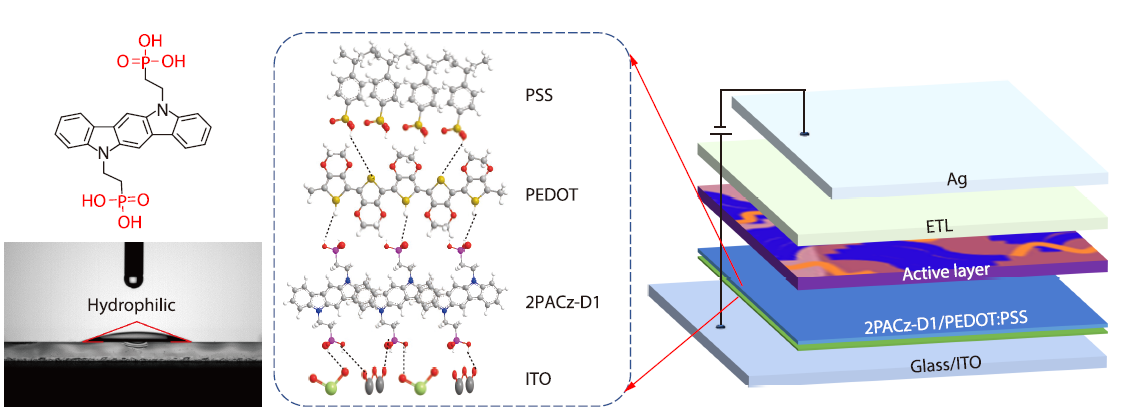
Carbazole derivatives with a single phosphonic acid (PA) group are widely used as monolayer interfaces in perovskites and organic solar cells (OSCs). However, their hydrophilic nature renders ITO electrodes hydrophobic, limiting further applications. In this study, a novel carbazole-based compound functionalized with two PA groups, denoted 2PACz-D1, was designed to create a dual hydrophilic interface. This configuration enables the formation of a bilayer hole-transporting layer (HTL). Specifically, one PA group anchors to the ITO electrode, while the other generates a secondary hydrophilic surface. This allows the subsequent deposition of hydrophilic PEDOT:PSS, forming a protective bilayer HTL that shields ITO from corrosive acidic polymers. The OSCs incorporating this bilayer HTL achieved a power conversion efficiency of 19.44% and exhibited improved thermal stability compared to devices with a single HTL. This work demonstrates the potential of bis-PA carbazole derivatives for tailoring the HTL surface properties, offering promising opportunities for various organic electronic devices.
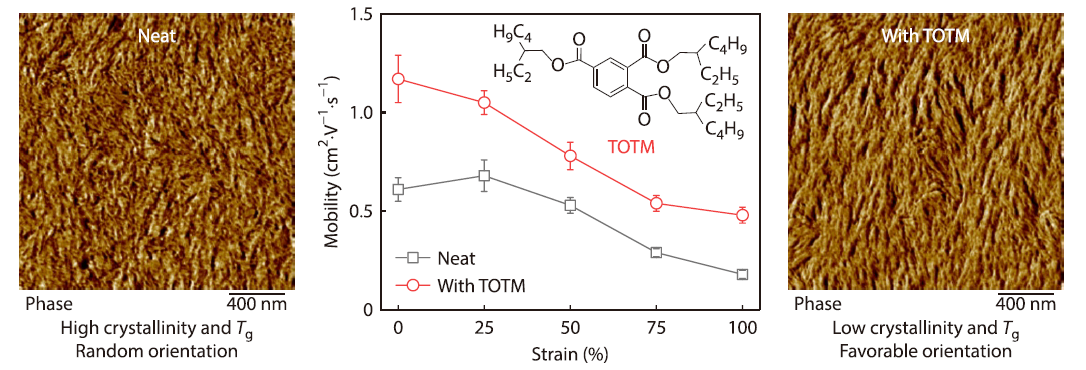
The scalable fabrication of stretchable conjugated polymer films via solution printing is essential for their practical application in large-area wearable electronics. However, the printed conjugated polymer films typically exhibit high crystallinity, limiting their mechanical deformability. Herein, we propose a plasticizer-assisted printing strategy to simultaneously enhance the stretchability and electrical performance of films based on the conjugated polymer poly(3-(5-(5-methylselenophen-2-yl)thiophen-2-yl)-6-(5-methylthiophen-2-yl)-2,5-bis(4-octyltetradecyl)-2,5-dihydropyrrolo[3,4-c]pyrrole-1,4-dione) (P(TDPP-Se)). The incorporation of a plasticizer trioctyl trimellitate (TOTM) promotes P(TDPP-Se) aggregation in initial solution, facilitates chain alignment under flow field, and shorten solidification process, thereby restricting randomly polymer crystallization. Consequently, a low-crystallinity film with favorable edge-on orientation, strong chain alignment and improved chain dynamics is realized, which effectively alleviates crystallites fragmentation and crack propagation under large strain. The TOTM-plasticized film exhibits approximately 2-fold improvements in fracture strain and charge mobility, along with superior mobility retention under 100% strain in comparison to the neat film. This study provides a feasible approach for microstructure control in printed stretchable conjugated polymer film.
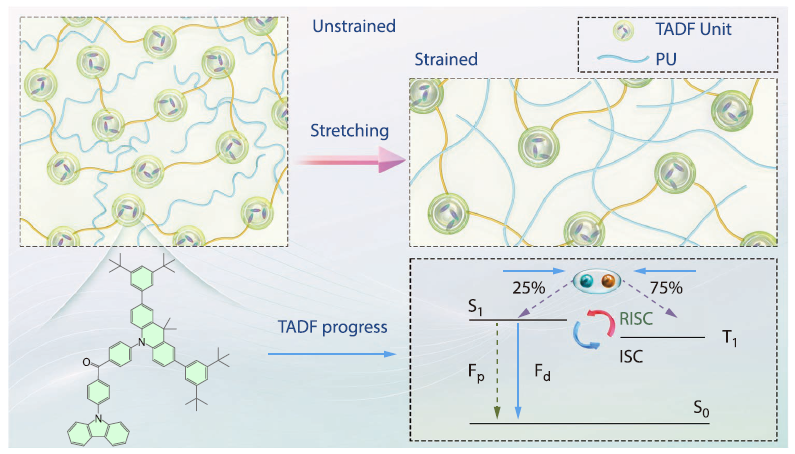
The increasing demand for flexible displays and wearable electronics has driven extensive efforts to develop stretchable organic light-emitting diodes (OLEDs). A critical challenge in this field is the creation of emissive layers that combine high efficiency with mechanical robustness. Thermally activated delayed fluorescence (TADF) materials have attracted significant attention as third-generation emitters capable of achieving 100% internal quantum efficiency; however, their application in stretchable OLEDs has been limited. In this study, we propose an elastomer doping strategy. Polyurethane (PU) is incorporated into TADF polymers to improve their mechanical flexibility while maintaining a high luminescent efficiency. The resulting composite films exhibited excellent TADF characteristics and remarkable stretchability (75%). OLEDs fabricated from these materials achieved a maximum external quantum efficiency (EQE) of 14.26% and a peak luminance of 73570 cd·m–2, with the PU-doped devices showing a significantly suppressed efficiency roll-off. Additionally, a fully stretchable OLED architecture was designed and operated under tensile strain to maintain stable electroluminescent performance. These results demonstrate that elastomer doping is an effective strategy for balancing the mechanical compliance with optoelectronic performance, offering a promising pathway for the development of high-performance stretchable OLEDs for flexible electronics.
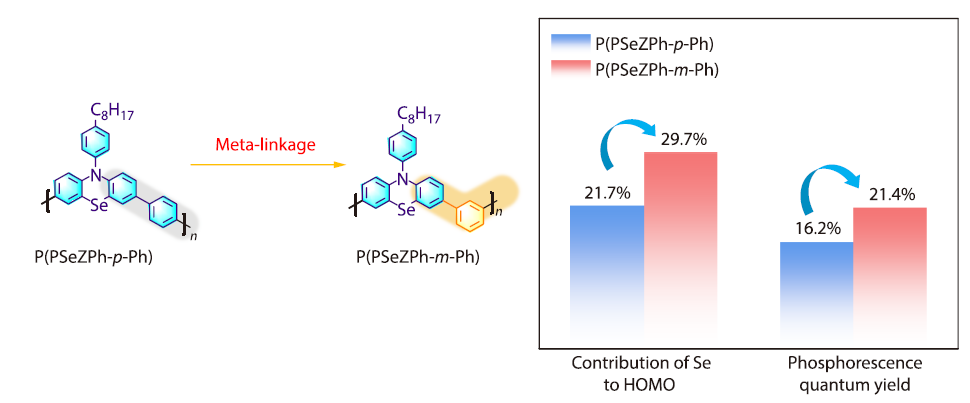
Pure organic room-temperature phosphorescent (RTP) polymers possess good processability and flexibility over small molecular crystals. However, most of RTP polymers reported so far are based on non-conjugated polymers, and achieving efficient phosphorescent emission in RTP conjugated polymers (CPs) remains a significant challenge. Herein, we developed two RTP CPs (P(PSeZPh-p-Ph) and P(PSeZPh-m-Ph)) by linking the phenoselenazine units with the para- and meta-phenylene units, respectively, to form the conjugated main chains. The phenylene linker with different lingking mode manipulates the effictive π-conjugation of the polymer backbones. Comparing with the para-linked P(PSeZPh-p-Ph), meta-linked P(PSeZPh-m-Ph) exhibit the decreased effective π-conjugation and the enhanced contribution of selenium atoms to the frontier orbitals, leading to the larger spin-orbit coupling (SOC) constants and the accelerated phosphorescence radiative decay process. The P(PSeZPh-m-Ph) achieves a phosphorescence quantum yield of 21.4% in doped polystyrene films, which is among the highest efficiencies reported to date for pure organic RTP CPs. These CPs are applied to construct phosphorescent film sensors for oxygen detection with the high quenching constants (Ksv) up to 14.80 kPa–1 and low detection of limit of 0.84 ppm, demostrating the potential for application in oxygen film sensors.
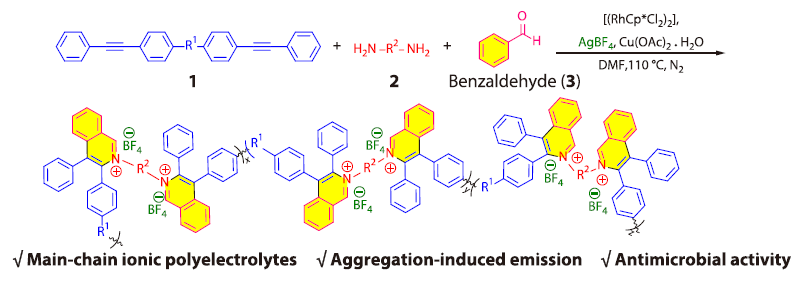
Aggregation-induced emission (AIE) polymers have been extensively studied; however, the integration of AIE units into polyelectrolytes remains largely limited by the laborious multistep synthesis of pre-designed emissive monomers. Herein, we report a one-pot multicomponent polymerization method that directly produces main-chain charged polyelectrolytes with intrinsic AIE characteristics from non-emissive building blocks. By optimizing the monomer structures and reaction conditions, a series of soluble high-molecular-weight polymers with well-defined backbones were obtained in high yields. The resulting polyelectrolytes displayed robust AIE behavior, exhibiting fluorescence enhancement up to about 60-fold in an aqueous environment, and maintained excellent thermal stability. Owing to their cationic backbones, these polymers interact strongly with microbial surfaces and exhibit remarkable antimicrobial activities. This study establishes a synthetically efficient route to AIE polyelectrolytes and highlights their potential applications as multifunctional materials for bioimaging, antimicrobial therapy, and other applications.
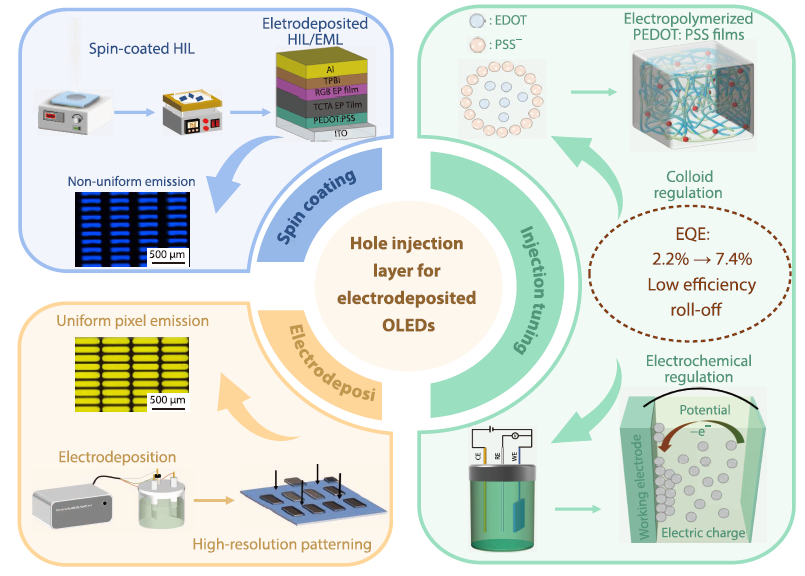
Electrodeposited organic light-emitting diode (OLED) technology requires a spin-coating-free hole-injection layer that simultaneously provides smooth surface morphology, stable energy levels, and compatibility with high-resolution pixel architectures. In this study, electropolymerization of 3,4-ethylenedioxythiophene (EDOT) in poly(styrene sulfonate) (PSS–) surfactant-solubilized colloidal media is shown to afford poly(3,4-ethylenedioxythiophene):poly(styrene sulfonate) (PEDOT:PSS) films with robust surface uniformity and stable energy levels suitable for application as hole-injection layers in OLEDs. Systematic investigation reveals that the hole-injection properties of these films are governed primarily by the colloidal chemistry of EDOT/PSS– surfactant-solubilized systems, rather than by conventional electrochemical parameters. This colloidal regulation modulates the film work function over a practically useful range. Incorporation of optimized films into OLEDs leads to enhanced hole injection and improved device performance, with external quantum efficiency increasing from 2.2% to 7.4% and minimal roll-off. Overall, this work demonstrates a feasible example of realizing spin-coating-free hole-injection layers, offering a potential direction for the development of electrodeposited injection layers for OLEDs.
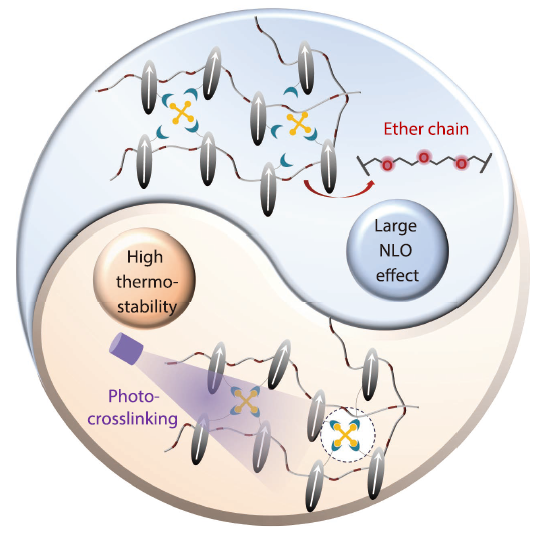
One of the most significant challenges in commercializing organic second-order nonlinear optical (NLO) materials lies in the inherent trade-off between nonlinearity and stability. A key factor in mitigating this compromise is achieving precise temporal synchronization between the formation of the cross-linked network and the establishment of an optimal non-centrosymmetric alignment of the chromophores. Guided by this principle, we developed a series of NLO polymers incorporating multiple ether chains with low rotational energy barriers, which facilitate molecular reorientation during electric field poling, thereby enhancing the NLO response effectively. Combined with an optimized photo-crosslinking strategy, the resulting PX4o/PETMP doped film achieved large macroscopic NLO coefficient of 190 pm·V−1 and thermal degradation temperature as high as 120 °C. This work offers a universal approach to alleviating the “nonlinearity-stability” trade-off in a wide range of polymeric systems.
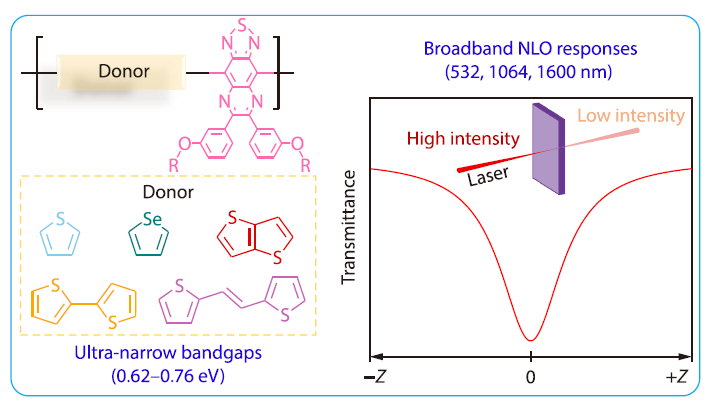
Construction of electron donor-acceptor (D-A) conjugated system is an established strategy for achieving reverse saturable absorption (RSA) and broadband optical limiting (OL). Nevertheless, organic materials exhibit OL ability across the visible to near-infrared-II spectra range remain scarce. Herein, a series of D-A type π-conjugated copolymers with ultra-narrow bandgaps (0.62–0.76 eV) and strong ICT absorption were synthesized by coupling electron-withdrawing block [1,2,5]thiadiazolo[3,4-g]quinoxaline (TQ) with various electron-donating groups (thiophene, selenophene, bithiophene, di(thiophen-2-yl)ethene, and thienothiophene for P1–P5, respectively). Z-scan experiments reveal that all copolymers exhibit RSA behaviours at both 532 and 1064 nm, while P1, P3 and P4 maintain RSA performance extending to 1600 nm. Among all copolymers, P5 exhibits the strongest RSA performance upon both 532 and 1064 nm laser pulses, with the highest nonlinear absorption coefficient (βeff) of 51.5 and 49.4 cm·GW−1, respectively, and the lowest OL onset fluence (Fon) of 0.31 and 0.38 J·cm−2, respectively. In contrast, P4 shows optimal RSA property at 1600 nm laser pulse, with βeff of 13.1 cm·GW−1 and Fon of 1.43 J·cm−2, respectively. Combining the results of Z-scan and UV-Vis-NIR experiments, it can be speculated that moderate ground-state absorption, rather than excessively strong absorption, favors superior RSA properties. This work offers valuable insights for designing copolymers with excellent RSA behavior, as well as presents a class of candidate material systems for ultrabroadband optical limiting.
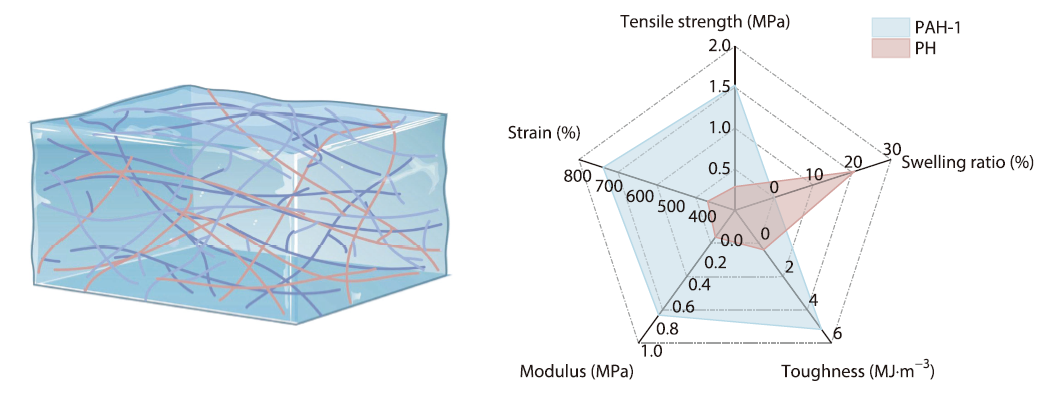
Hydrogels are widely employed in various cutting-edge fields due to their excellent flexibility and tunability. However, hydrogels undergo significant swelling when immersed in seawater or other ionic solutions, leading to a severe decline in their performance. Herein, we develop a composite hydrogel (PAH) with anti-swelling capability in different solution environments, constructed through hydrogen bonding interactions between rigid aramid nanofibers (ANF) and flexible poly(vinyl alcohol) (PVA). The dense three-dimensional skeleton within PAH not only dissipates energy to enhance its strength and toughness but also effectively inhibits water molecule penetration. Even after immersion in different ionic solutions, PAH maintains its structural integrity (equilibrium swelling ratio of only 0.1%), while retaining excellent mechanical properties. This work provides a simple and effective strategy for improving the anti-swelling ability of hydrogels in different solutions, offering insights for broadening the application scope of hydrogels.
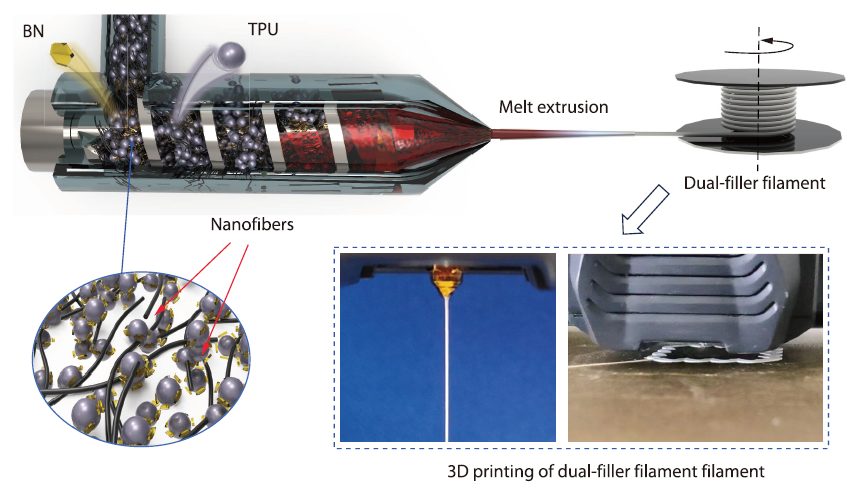
Integrating inorganic fillers into polymer-based 3D printing filaments is an effective strategy for improving thermal conduction but often compromises mechanical properties. In this study, we introduced electrospun polymer nanofibers (NF) into thermoplastic polyurethane (TPU) filaments alongside a ceramic filler, boron nitride (BN). By combining these organic (NF) and inorganic (BN) fillers, we created a dual-filler filament (TPU/BN/NF) that exhibited enhanced thermal conduction pathways without sacrificing the mechanical strength and electrical insulation. Comprehensive characterization demonstrated that BN improved heat transport, while a small fraction of electrospun NF effectively modulated the tensile modulus and partially recovered the strength lost upon BN addition. Finite element simulations further elucidated the influence of the nanofiber content, orientation, and length-to-diameter ratio on the mechanical performance. Notably, the dual-filler filaments retained good printability in standard fused deposition modeling (FDM) systems at optimized temperatures (about 210 °C). These findings offer a scalable approach for engineer multifunctional 3D printing filaments for 3D-printed thermal management products that require both thermal conduction performance and high insulation.
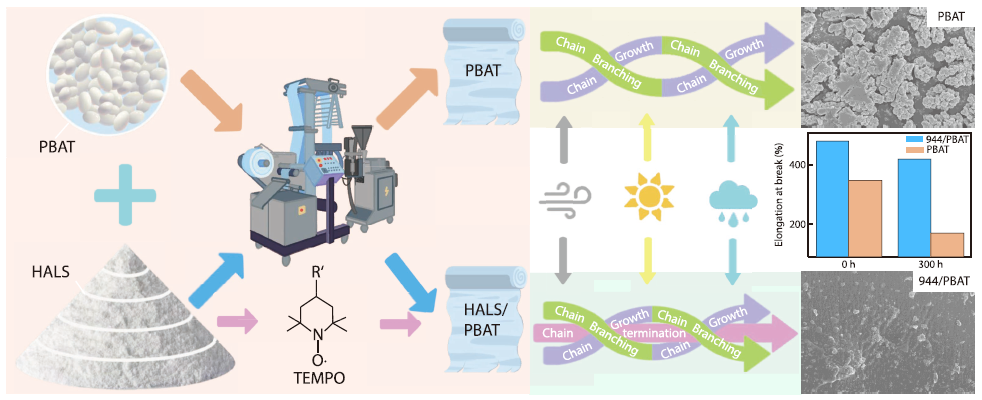
The application of poly(butylene adipate-co-terephthalate) (PBAT) biodegradable plastics has long been constrained by insufficient light aging resistance. Hindered amine light stabilizers (HALSs), known as eco-friendly additives, can scavenge free radicals to enhance polymer durability. However, rough choices have resulted in wastage of resources and environmental pressure. Based on the application of plastic films as the background for use, this study systematically evaluates application effects of five HALSs. The films underwent accelerated aging for various durations and were further investigated by a combination of experiments and molecular simulation. Results showed that all HALSs mitigated PBAT light aging, with Chimassorb-944 (UV-944) and Tinuvin-770 (UV-770) performing the best for real applications. Quantum chemical calculation results showed that UV-944 had stronger anti migration ability. After 300 h of aging, films with UV-944 and UV-770 retained superior tensile strength and elongation at break in the transverse direction compared to neat PBAT films. Polymeric HALSs provided better long-term stability than small-molecule ones. Further spectra analysis indicated that stronger C―O bonds in HALS/PBAT composites correlated with improved photostability. This study offers valuable insights into improving weather resistance of PBAT biodegradable films and optimizing the real application of HALSs.
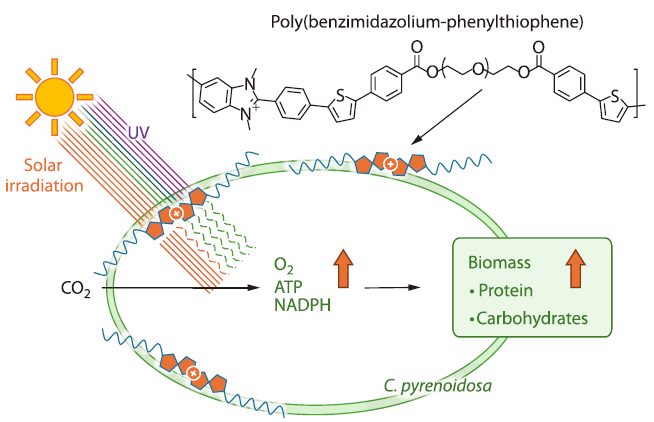
The development of synthetic hybrid biological systems integrating photosynthetic organisms with organic-abiotic functional materials holds significant promise for enhancing photosynthetic processes. The artificial regulation of the state transition between photosystem I (PSI) and photosystem II (PSII) represents a strategic and promising approach for improving the efficiency of natural photosynthesis. In this study, we demonstrate that poly(benzimidazolium-phenylthiophene) (CP4) featuring a flexible cationic backbone exhibits superior ultraviolet light-harvesting capability. The polymer CP4 enhanced PSI activity in Chlorella pyrenoidosa (C. pyrenoidosa), subsequently promoting PSII activity and augmenting overall photosynthetic performance. During light-dependent reactions, CP4 significantly accelerated photosynthetic electron transfer, resulting in a 330% increase in the production of oxygen and 93% and 96% increases in the ATP and NADPH contents, respectively. In the context of dark reactions, CP4 facilitated the conversion and utilization of light energy, leading to a 6% increase in both carbohydrate and protein contents. These findings indicate that synthetic light-harvesting polymer materials exhibit considerable application potential in the field of biomass production through enhancement of natural photosynthetic efficiency.
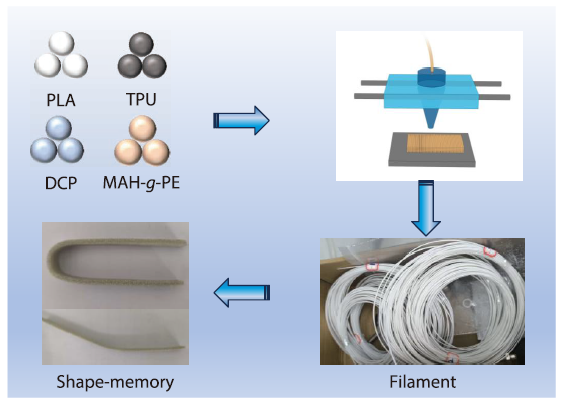
This study aimed to systematically regulate the performance of 4D printing composites by investigating the synergistic effects of dicumyl peroxide (DCP) and maleic anhydride-grafted polyethylene (MAH-g-PE) on a poly(lactic acid)/thermoplastic polyurethane (PLA/TPU) matrix. Specifically, using a 70 wt%/30 wt% PLA/TPU matrix and an L9(32) orthogonal design, composites were evaluated via morphology, shape memory, mechanical tests, and multi-criteria analysis. Moderate DCP enhanced crosslinking, improving storage modulus and thermal stability, while excessive DCP caused brittleness. Furthermore, MAH-g-PE effectively improved interfacial compatibility, and its synergy with DCP was dosage-dependent. Consequently, Sample 5 achieved optimal performance, exhibiting uniform fracture morphology, a shape fixation rate of 98.8% with the fastest recovery, and balanced strength-ductility. Multi-criteria analysis identified elongation at break and recovery time as the top contributing factors, with consistent rankings validated by Spearman analysis (ρ=0.833, p<0.01). In summary, adjusting DCP and MAH-g-PE contents effectively modulates the crosslinking structure and interfacial properties of PLA/TPU composites, providing a viable strategy for developing high-performance, tunable 4D printing materials.
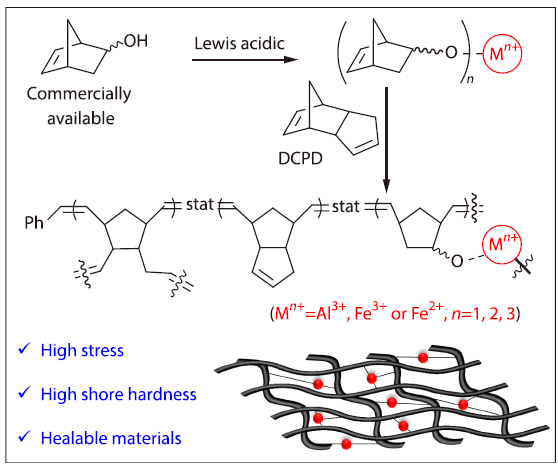
Thermosetting polymers exhibit outstanding mechanical properties, thermal stability, and chemical resistance due to their permanently cross-linked network structures. However, the irreversible nature of covalent cross-linking renders these materials non-reprocessable and non-recyclable, posing significant environmental challenges. Although healable polymers based on dynamic covalent bonds and supramolecular interactions have emerged as promising alternatives, a broadly applicable strategy utilizing metal-ligand coordination in thermoset systems remains underexplored. In this work, we present a robust and healable thermoset system fabricated via ring-opening metathesis polymerization (ROMP) of commercially available chelating norbornene comonomers. Cross-linking is accomplished through O-donor coordination to Lewis acidic metal centers, yielding polydicyclopentadiene (PDCPD)-based networks that demonstrate high mechanical strength (up to 60.8 MPa) and effective self-healing performance. This methodology offers a simple and scalable approach to developing high-performance, sustainable thermosetting materials.
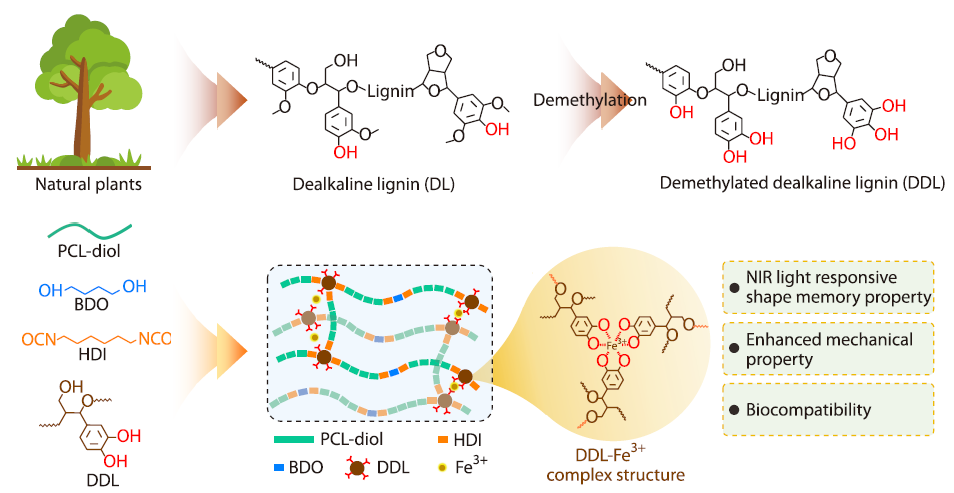
Near-infrared (NIR) light-responsive shape memory polymers (SMPs) show great promise for biomedical applications, but conventional photothermal agents suffer from high cost, complex preparation, or poor biocompatibility, while lignin-based alternatives exhibit insufficient photothermal conversion efficiency. Herein, we developed a novel strategy to enhance photothermal performance of lignin through sequential demethylation modification and Fe3+ complexation for constructing NIR light responsive SMPs. Dealkaline lignin (DL) was first demethylated using iodocyclohexane to produce demethylated lignin (DDL) with increased catechol content, which was then incorporated into polycaprolactone-based polyurethane synthesis followed by Fe3+ complexation. Results showed that DDL-Fe3+ complexes have significantly enhanced photothermal conversion performance, and the resulting PU-DDL+Fe3+ polyurethane with 0.5 wt% DDL content demonstrated a temperature increases of 39.8 °C under 0.33 W·cm–2 808 nm NIR irradiation. This excellent photothermal performance enables the shape-fixed PU-DDL+Fe3+ polyurethane to rapidly recover to its initial shape under NIR light irradiation. Additionally, PU-DDL+Fe3+ polyurethane exhibits good mechanical properties and biocompatibility, demonstrating significant biomedical application potential.
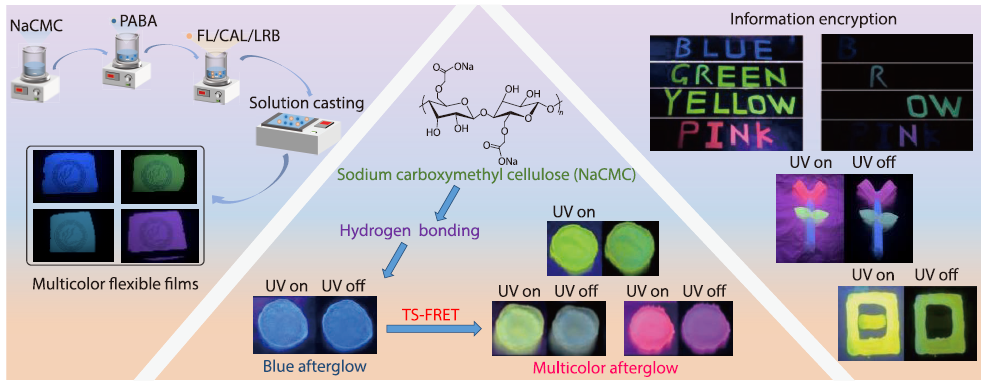
Developing eco-friendly natural polymer-based room-temperature phosphorescence (RTP) materials with color-tunability and flexibility remains a crucial yet challenging task. Here, we fabricate a sustainable multicolor-tunable and flexible RTP system based on sodium carboxymethyl cellulose (NaCMC). p-Aminobenzoic acid (PABA) is doped into NaCMC matrix to facilely construct NaCMC/PABA composites. The rigid hydrogen-bonding networks formed between NaCMC and PABA significantly suppress molecular vibration and non-radiative decay, resulting in an ultralong RTP lifetime of up to 1263 ms and a bright blue afterglow lasting 11 s. By incorporating commercial fluorescent dyes fluorescein (FL), calcein (CAL), and lisamine rhodamine B (LRB) as energy acceptors into the NaCMC/PABA donor matrix, multicolor long-afterglow emissions are realized in the long-wavelength region via triplet-to-singlet Förster resonance energy transfer (TS-FRET). Moreover, large-area, multicolor and flexible NaCMC-based RTP films with excellent mechanical properties are conveniently fabricated by a doping-coating-drying approach. The developed multicolor and flexible NaCMC-based RTP materials are successfully used for advanced information encryption. This work provides a direction for developing sustainable, multicolor-tunable, and flexible natural polymer-based RTP materials.
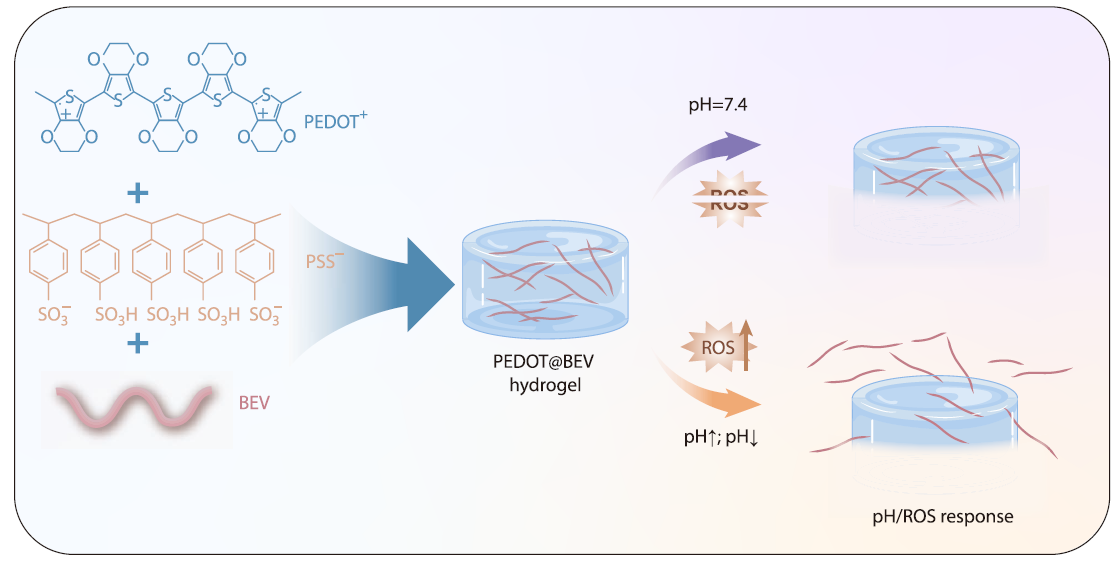
Multiresponsive hydrogels, capable of responding to more than one external stimulus, have demonstrated great utility in biomedical applications. This study presents a facile method for preparing an injectable, dual redox/pH-responsive hydrogel system based on poly(3,4-ethylenedioxythiophene):poly(4-styrenesulfonate) (PEDOT:PSS) for the controlled delivery of pharmacologically active bevacizumab (BEV). The hydrogel system was fabricated via a one-step physical crosslinking process by mixing PEDOT:PSS with BEV, leveraging electrostatic interactions, hydrogen bonding, and ionic crosslinking. The resulting PEDOT@BEV system exhibited a homogeneously porous structure, robust mechanical stability, and good biocompatibility. Under acidic (pH=5) or alkaline (pH=10) conditions, especially when coupled with elevated reactive oxygen species (ROS) levels, the as-prepared PEDOT@BEV achieved rapid BEV release. This may be attributed to PEDOT oxidation and charge repulsion. In contrast, BEV release remained stable under physiological conditions (pH=7.4, 0 mmol/L H2O2). In vitro results supported that the resulting PEDOT@BEV demonstrated potent anti-angiogenic efficacy, significantly inhibiting cellular migration and tube formation of human retinal vascular endothelial cells (HRVECs). The vascular endothelial growth factor expression was further reduced. In a mouse model of corneal neovascularization, the PEDOT@BEV system enabled the continuous controlled release of BEV for over 14 days. It exhibited superior anti-angiogenic efficacy compared to free BEV treatment, more effectively reducing neovascularization and corneal inflammation. The designed platform in this work demonstrated versatility by successfully incorporating other therapeutic antibodies (e.g., rituximab, trastuzumab), highlighting its potential for tailored drug delivery in oncology and neovascular diseases. The outcome of this study offers a promising strategy for spatiotemporally controlled drug release in response to specific microenvironmental cues.
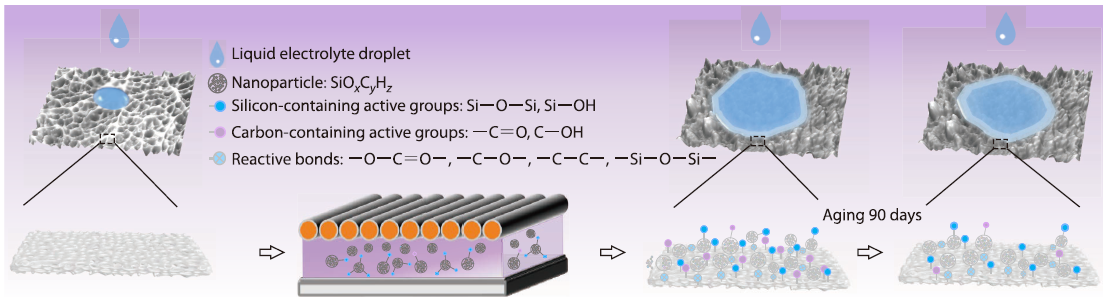
The rapid decay of the surface wettability of plasma-treated polymers remains a critical limitation for their practical application in advanced materials. This study introduces a continuous atmospheric pressure plasma (APP) technique for fabricating polyethylene (PE) separators with durable wettability, and elucidates the underlying mechanism. A systematic comparison of APP treatments with non-deposition and deposition gases, including Ar, Ar/O2, Ar/tetramethylcyclotetrasiloxane (TMCTS), and Ar/O2/TMCTS, revealed the key impact factors in achieving durable wettability. Owing to the synergistic interactions of SiOxCyHz nanoparticulate deposition, physical etching, and oxidative functionalization, the PE separator treated by Ar/O2/TMCTS exhibited a 17.5-fold electrolyte wetting area compared to the original one. The improved surface energy and roughness of the SiOxCyHz nanoparticle coating enhanced its electrochemical performance. The ionic conductivity increased by 1.9 times, while the charge transfer resistance decreased by 73.7%. Remarkably, owing to further oxidation of the SiOxCyHz nanoparticle coating and the increase in its silica-like structure, the wetting area of the Ar/O2/TMCTS-treated separator was still over 14-fold larger than that of the original separator after aging for 90 days. This study demonstrates an eco-friendly and scalable approach for fabricating high-performance battery separators and provides mechanistic insights into durable wettability by APP.
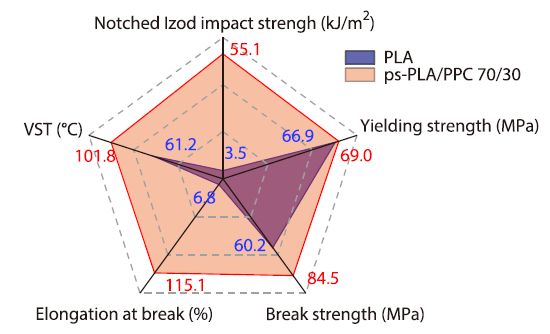
A polylactide (PLA) blend with simultaneous enhancement of strength, toughness, and heat resistance was successfully achieved by adding biodegradable poly(propylene carbonate) (PPC) and uniaxial pre-stretching. The effects of the PPC content (0 wt%–50 wt%) on the phase morphology and performance of the blends before and after pre-stretching were systematically investigated. Blending PPC initially reduced the strength, modulus, and heat resistance, but pre-stretching significantly enhanced these properties. In blends containing ≤30 wt% PPC, where PPC formed a well-dispersed island-like phase within the PLA matrix, pre-stretching simultaneously enhanced strength, toughness, and heat resistance. The optimized pre-stretched 70/30 PLA/PPC (ps-70/30) blend achieved exceptional performance: tensile strength increased from 66.9 MPa to 84.5 MPa, elongation at break dramatically improved from 6.8% to 115.1%, impact strength reached 55.1 kJ/m2 (far exceeding neat PLA’s 3.5 kJ/m2), and Vicat softening temperature (VST) increased by 60.6% to 101.8 °C. Notably, the ps-70/30 blend retained excellent mechanical properties even after six months of aging. These improvements were attributed to the synergistic effects of the PPC incorporation and pre-stretching. PPC not only promoted the high orientation of the PLA molecular chains but also facilitated the formation of a stable crystalline phase during pre-stretching, thereby enhancing both the mechanical properties and heat resistance. However, when the PPC content exceeded 30 wt%, phase inversion occurred, resulting in a continuous amorphous PPC phase that degraded the overall performance. This study demonstrated that a combination of controlled PPC incorporation and pre-stretching can effectively overcome PLA’s brittleness of PLA while improving its heat resistance, offering a promising strategy for developing high-performance, fully biodegradable PLA materials suitable for industrial applications.
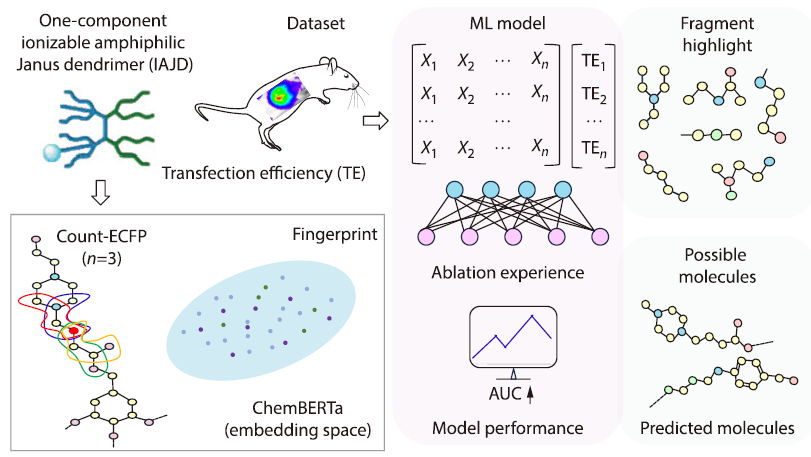
The efficient and safe delivery of messenger RNA (mRNA) therapeutics remains a critical challenge for clinical translation, driving the need for advanced carrier design. Ionizable amphiphilic Janus dendrimers (IAJDs) represent a promising class of carriers; however, their structural complexity and limited available datasets hinder systematic exploration and optimization. In this study, we established a tailored machine-learning framework to investigate the structure-function relationships of IAJDs under a constrained data regime (n=231). Conventional molecular fingerprints were found to be suboptimal for representing these macromolecules, motivating the adoption of count-based descriptors and systematic ablation analyses to disentangle the contributions of the substructural features. These experiments identified key functional motifs underlying transfection performance and provided interpretable insights into the IAJD design principles. Complementing these handcrafted descriptors, we further applied deep learning-based molecular embeddings, which captured higher-order chemical semantics and significantly improved predictive accuracy. Collectively, these advances demonstrate that both refined fingerprinting and representation learning approaches can overcome data limitations, enabling the reliable prediction of IAJD activity while offering mechanistic interpretability. This study illustrates the potential of data-driven strategies as hypothesis-generation and prioritization tools for the design of next-generation mRNA delivery systems.
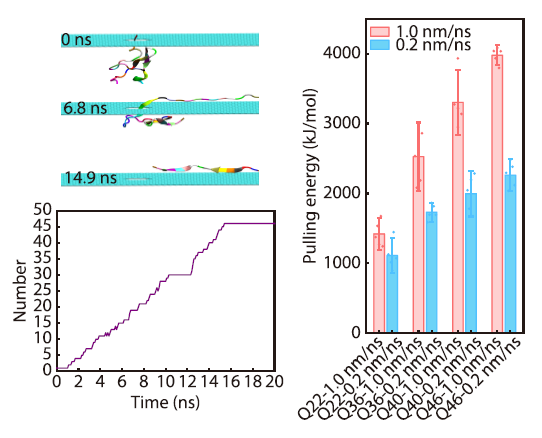
Huntington's disease (HD) is caused by the abnormal expansion of polyglutamine (polyQ) repeats encoded in exon 1 of the huntingtin (HTT) gene, with neurotoxicity typically emerging when the repeat length exceeds 36 glutamine residues. Increasing the polyQ length promotes hypercompact conformations; however, how such compact chains mechanically unfold under nanoconfinement remains insufficiently understood. In this study, all-atom molecular dynamics simulations were performed to investigate the nanopore transport and surface-induced unfolding of polyQ chains of different lengths (Q22, Q36, Q40, and Q46) through graphene nanopores under controlled pulling velocities. By quantitatively analyzing the transport dynamics, as characterized by the pulling force, radius of gyration, center-of-mass distance, interaction energies, number of transported residues, and pulling energy, we demonstrated that polyQ chains of all investigated lengths can successfully translocate through the nanopore and undergo progressive unfolding on the graphene surface over a wide range of pulling velocities. Longer polyQ chains exhibit a higher resistance to unfolding, characterized by enhanced force peaks and increased pulling energy, reflecting stronger intramolecular interactions. Moreover, slower pulling velocities reduce the force fluctuations and lower the overall pulling energy. These results provide molecular-level mechanistic insights into the length-dependent transport and surface-mediated unfolding of polyQ, offering a physical basis for understanding polyQ conformational regulation relevant to Huntington's disease.
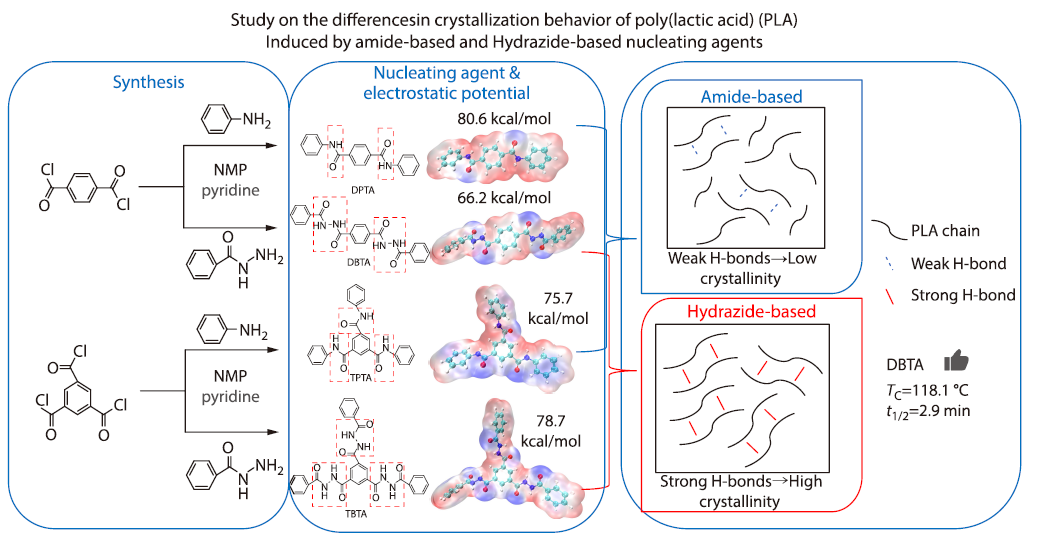
Although amide- and hydrazide-based nucleating agents have been extensively used to enhance the crystallization performance of poly(lactic acid) (PLA), structurally similar nucleating agents exhibit significant differences in their crystallization-promoting efficiency, and the underlying mechanism remains unclear. In this study, a series of nucleating agents, including N,N-diphenylterephthalamide (DPTA), N,N,N-triphenyl-1,3,5-benzenetricarboxamide (TPTA), N,N-diphenyl terephthalohydrazide (DBTA), and N,N,N-tribenzoyl-1,3,5-benzenetricarbohydrazide (TBTA), were designed and synthesized to investigate the differences in their effects on the crystallization performance of PLA. Density functional theory (DFT) and molecular dynamics (MD) simulations showed that DBTA had a smaller electrostatic potential difference (66.2 kcal/mol). During the cooling process, DBTA could stably form more intermolecular hydrogen bonds with PLA and exhibit a higher interaction energy, thus theoretically enabling more efficient promotion of PLA crystallization. Further differential scanning calorimetry (DSC) results revealed that at a 0.5 wt% loading of DBTA, the crystallization peak temperature of the PLA-DBTA composite reached 118.1 °C during cooling, whereas no distinct crystallization peak was observed for pure PLA under identical conditions. The crystallinity of the composite was significantly increased to 58.4% compared to 14.6% of pure PLA. Moreover, under isothermal crystallization at 130 °C, DBTA reduced the half-crystallization time of PLA to 2.9 min, while the half-crystallization time for pure PLA was 27.4 min. Time-resolved Fourier transform infrared spectroscopy (FTIR) results also confirmed that DBTA promoted the formation of gt conformational isomers of PLA during the crystallization process. This study elucidates the mechanism behind the performance differences between structurally similar nucleating agents in regulating PLA crystallization from the perspective of molecular electrostatic potential and hydrogen bonding interactions, providing a theoretical basis for the molecular design of efficient nucleating agents.
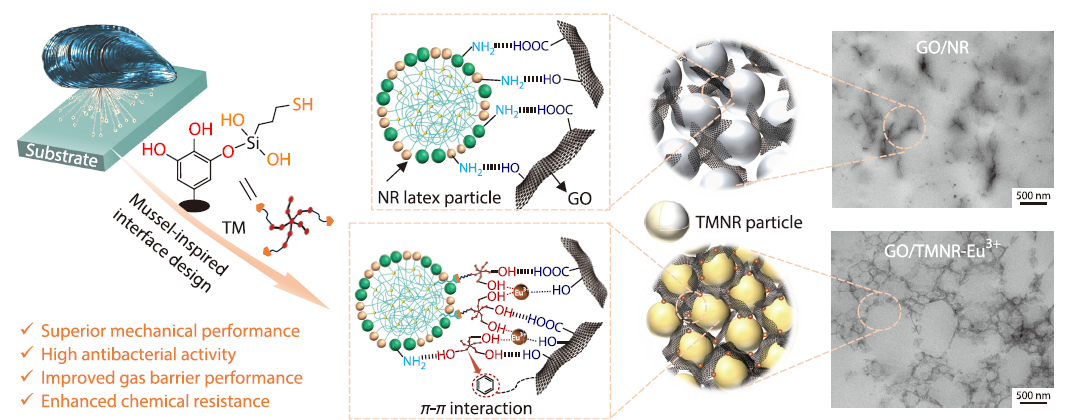
Natural rubber (NR) latex is a renewable colloidal dispersion used in medical gloves, coatings, and flexible products. It is known for its excellent elasticity and film-forming ability but is limited by insufficient mechanical robustness and chemical resistance. Incorporating nanofillers, such as graphene oxide (GO), is an effective approach to enhance its performance; however, achieving strong interfacial compatibility between hydrophilic GO and the nonpolar rubber matrix remains challenging. To overcome this issue, a multifunctional interfacial design inspired by mussel adhesion chemistry was developed to construct a hierarchical and cohesive GO network within the NR latex matrix. A tannic acid-based modifier (TM) bearing catechol and thiol groups was synthesized and anchored onto latex particles via hydrogen bonding with surface proteins and phospholipids, enabling subsequent π–π interactions and hydrogen bonding with GO nanosheets. This guided the selective self-assembly of GO into a continuous segregated network along the latex particle boundaries. Hierarchical interface reinforcement was achieved through Eu3+ ligand coordination. The incorporation of GO and enhancement of interfacial interactions promoted strain-induced crystallization, resulting in increased crystallinity and improved load transfer. The resulting composite film containing 0.5 part per hundred rubber GO and the bioinspired interface exhibited a tensile strength that was 107.8% higher than that of the pure NR latex film, while maintaining an elongation at break of 915%. Tear strength increased by 118.5%, toughness reached 61.7 MJ/m3, nitrogen permeability decreased by 20.1%, and antibacterial efficiency against both Escherichia coli and Staphylococcus aureus reached 99.9%. The films also exhibited enhanced resistance to organic solvents, acids, and alkalis. This study provides a green and scalable strategy for fabricating high-performance NR latex-based products suitable for medical, protective, and engineering applications.